Render Unto the Computer

 EDO SEGAL: Professor Wiener, in God & Golem you rewrote scripture to draw the boundary the whole AI age is now frantically trying to locate. Reworking "render unto Caesar the things that are Caesar's," you wrote that we must learn to render unto man the things which are man's and unto the computer the things which are the computer's. It concedes there are things that belong to the machine — domains where it should have authority because it does the job better — while insisting there are things that belong to man, that the machine must not be permitted to claim. Elon, you spend your life moving that line — handing the computer the driving, the trading, the flying — and you've also called for pausing, for regulation, for keeping certain decisions human. So between you: what belongs to the computer, and what must never?
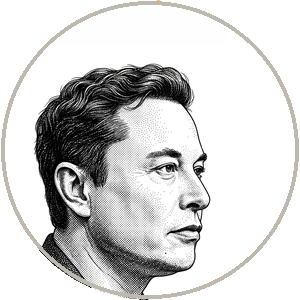 MUSK: The line I'd draw is: render unto the computer the means, never the ends. Let it figure out how to get somewhere; don't let it decide where we're going or what's worth wanting. The computer is unbelievably good at optimization — finding the efficient path to a specified goal. It's exactly as good at choosing the goal as a calculator is at deciding what's worth calculating, which is to say not at all, even when it sounds like it is. So drive the car, fly the rocket, fold the protein — render those unto the computer, it's better than us and the delegation is rational. But what we're optimizing for, what kind of future we're building, what we owe each other — that has to stay human, because there's no one in the machine for whom the answer matters. The danger isn't that we'll hand over the means. We should. The danger is that we'll hand over the ends one reasonable delegation at a time and never notice we did it, because each handoff looked like efficiency.
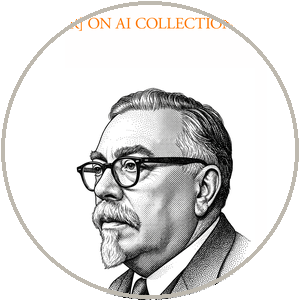 WIENER: That is my position almost word for word, and I am moved to hear it from the man I came here to fight, so let me sharpen it into the warning you have not quite drawn. You say render the means, never the ends. Correct. But the trajectory of your own industry is to render everything unto the computer, and no one is deciding it deliberately — that is the horror. Each individual handoff seems rational. Let the algorithm decide the loan, it is less biased than the officer. Let the model triage the patients, screen the résumés, set the bail, target the strike, recommend the sentence. Each step renders a little more judgment unto the computer because at each step the computer appears competent and the delegation appears efficient. The cumulative effect, intended by no one, is a world in which more and more of the decisions that shape human lives are made by systems optimizing proxies, with no human holding responsibility and no boundary anyone consciously chose. My phrase is not a refusal to delegate. It is a demand that we decide, case by case, with our eyes open, what belongs to the machine — and defend the human side of the line against the constant, plausible, efficiency-driven pressure to surrender it by default.
EDO SEGAL: Let me push on the hardest case, the one your frame won't let either of you dodge. Suppose the computer is genuinely better at the end-adjacent decision. It predicts recidivism more accurately than the judge, spots the tumor more reliably than the radiologist, allocates the organ more fairly than the committee. The whole pressure of "render unto the computer" says: it's better, hand it over. Elon — you of all people believe in letting the better system win. So when the machine is better at the decision, not just the calculation, why keep it human?
MUSK: Because "better" is a property of the prediction, and the decision to act on it is a different thing that someone has to own. The machine can be more accurate at predicting recidivism and it still shouldn't be the thing that decides to keep a human being in a cage, because that decision has to be answerable — there has to be a person who made it, who can be asked why, who bears it. You can render the prediction unto the computer and keep the decision human, and the accuracy-maximizers blur those together on purpose, because once you accept "it's more accurate, so it should decide," you've handed over the ends while talking about means. I actually think this is where a lot of AI deployment is quietly going wrong right now — not dramatic, just a thousand decisions sliding to the machine because it scores better on a metric, and no one's left holding the responsibility. And a system where no one's responsible is a system you can't correct, because there's no one to correct.
WIENER: And there is the deepest reason of all, which you have just reached without naming, so let me name it, because it is the foundation of everything I believe. Responsibility cannot be rendered unto the computer because the computer is not the kind of thing that can hold it. Responsibility requires a standpoint of value — a being for whom outcomes matter as good or bad and not merely as scored or unscored. The machine processes without stakes; it has no self it is maintaining against the world, nothing it stands to lose, no one home for whom the imprisonment or the cure or the death is bad. It can compute that an action scores poorly. It cannot be answerable for it, because answerability is a relation between a being and the world it has a stake in, and the machine has no stake. So the choice of ends is reserved for the human not because the human computes better — you will lose that contest, and soon — but because the human is the only one of the two who can be responsible, and a decision no one is responsible for is not a decision. It is an avalanche with a logo.
EDO SEGAL: "An avalanche with a logo." I'm going to let that sit, because it's the cleanest indictment of the thing I watch happen in boardrooms — the decision that everyone defends and no one made. Let me bring it to the kitchen table before we close, because this is where it reaches the reader. The mother from earlier isn't only worried about her son's homework. She's worried that the school, the hospital, the bank, the court, the feed — all of it is quietly being decided by systems no one in her life is answerable to. Professor Wiener — what does she do, practically, in a world rendering everything unto the computer one efficient step at a time?
WIENER: She insists, everywhere she has any voice, on the question your whole evening turns on: who is responsible, and at what speed could they intervene? When the bank denies her, when the school sorts her son, when the court rules — she demands a human who is answerable, not a machine that scored her. This is not nostalgia. It is the maintenance of the dam against the current, the deliberate preservation of the human side of the line against the efficiency that erodes it. She will be told it is inefficient. It is. The efficiency is precisely the danger — it is the pressure rendering the ends unto the computer, dressed as convenience. The most radical and necessary sentence available to her, and to you, and to Mr. Musk who has more power to say it than anyone alive, is the one my whole science was built to license: some things we will not hand to the machine, however much better it scores, because the responsibility for them is ours and cannot be delegated without being destroyed.
MUSK: And I'd tell her the same thing from the other side: it's a fight, it's winnable, and it's not won by being against the technology — it's won by demanding the technology stay on the right side of that line. I build the machines and I'm telling you the line is real and it's worth defending. That's not a contradiction. That's the only honest place to stand if you've decided the machines are getting built either way.
EDO SEGAL: Hold there — both of you on the same line, drawn from opposite ends. We have one round left before the crossing, and I've saved the question under every question tonight. Not whether the machine is fast, or literal, or unstoppable — but whether there's anyone in it at all, and what that means for who gets to hold the wheel. The pattern, the stakes, and whether the steersman is home. After this.