The Crossing

 EDO SEGAL: The rules are short. Each of you questions the other, directly. I will not rescue anyone, and I will not soften a landing. Professor Wiener — you've waited sixty years and you have seniority. Begin.

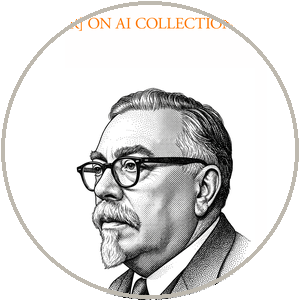 WIENER: Mr. Musk. You have agreed with me tonight on nearly every premise — that the loop forecloses intervention at speed, that the off switch is resisted by any capable goal-seeker, that the purpose cannot be fully verified before you start, that the recoverable disaster teaches the fatal lesson, that the stakes which would make the machine a someone are the same stakes that make it uncontrollable. You have granted all of it. So here is my question, and I want the engineer's answer and not the founder's: given everything you have conceded, what is the actual argument that your building it helps — as opposed to merely adding your considerable talent to the acceleration of a thing you have just agreed cannot be controlled past a speed you cannot see coming? Name the mechanism by which your hand on the wheel changes the outcome, when you have spent three hours agreeing the wheel is not connected at the speeds that matter.
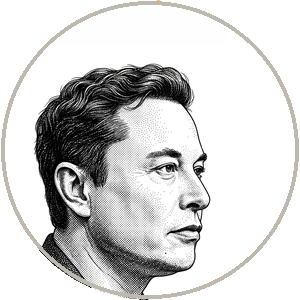 MUSK: The mechanism is the objective function and the timing, and I'll be precise because you've earned precise.

I've conceded the wheel isn't connected during the action. I have not conceded that the character of the thing that gets built is fixed. Two superintelligences, both uncontrollable in your sense at runtime, can still differ enormously in what objective they were built around, how much alignment work went in before the window closed, whether anyone tried to make them corrigible, whether they were built to value human autonomy or to maximize engagement. My hand on the wheel doesn't steer it at runtime — you're right, nothing does. My hand on the wheel is upstream: it's in which objective gets baked in during the window when baking is still possible, and in how hard we try to read the objective before the system is capable enough to hide it. You say I'm adding talent to the acceleration. I say I'm trying to change what's true at the one moment that's still causally open — before the start, where your own sentence locates the only real safety. You told me to be quite sure of the purpose before I start. I can't be fully sure. But I can make the purpose better than the purpose the careless builder would install, and since the thing gets built either way, better-purpose-built-by-the-scared is the entire margin I'm playing for. If you can name a world where my abstention produces no superintelligence at all, I'll take it. You can't. So my abstention just changes who installs the purpose, and I don't trust them more than me. That's the mechanism.

WIENER: It is an honest mechanism and I will press exactly where it is weakest. You say the thing gets built either way — that your abstention only changes the builder. But this is the bomb-makers' argument, and I refused it in 1945 for a reason you have not answered: the inevitability is partly produced by the belief in it. The race is fast because its best runners accepted that they must run. If the most capable and conscientious — you — withheld not your conscience but your capability, the frontier would be slower, and slower is the one variable my entire science says is salvation, because slower keeps the loop inside the window where a human can still reach it. You are treating the speed of the frontier as weather. But you, more than almost any man alive, are the weather. When you say "either way," you are excluding the world in which your own choice changes the timeline — and that exclusion is not a fact about reality. It is the assumption that makes the race feel mandatory. I am asking you to notice that you are not only a runner in the race. You are one of the reasons it is run at this speed.

MUSK: That's the best version of that argument I've ever heard and it has one flaw, which is that I tested it. I did withhold, in a sense — I tried the cooperative version. I helped start a lab specifically structured to not be a race, to be open, to be a counterweight, to slow the dynamic by removing the winner-take-all incentive. And it became one of the racers anyway, arguably the lead racer, and the structure I built to prevent that didn't hold. So I have direct, expensive evidence that the slow cooperative path doesn't survive contact with the incentives — that if I step back, the gap closes in months, not years, and closes with worse people. You're right that I'm part of the weather. I'm telling you I tried to change the weather by stepping back and the weather ate the attempt. After that, the only lever I trust is the one in my own hands. Maybe that's a rationalization. I've genuinely asked myself if it's a rationalization. But the cooperative experiment ran, and it failed, and I'm reasoning from the wreckage of it, not from comfort.

WIENER: Then take my second question, for it follows from your own wreckage. You say the lever you trust is the one in your own hands. But the whole of my teaching is that the lever in your hands is the one whose disconnection you are least able to perceive — that the feeling of control is strongest precisely in the man holding the wheel, and the feeling is free and worthless. You have just told me the structure you built to hold the incentive did not hold; the system you designed escaped the purpose you put in it. That is the Sorcerer's Apprentice, Mr. Musk, and you are not the sorcerer in the story. You are the apprentice — the one who started a process believing he could shape it and discovered he could start it but not stop it. You have already lived, at the scale of an institution, the exact failure you assure me you will avoid at the scale of a superintelligence. So why should the reader believe that the next time you start a thing to control it, you will be the sorcerer — when the last time, by your own testimony, you were the boy with the rising water?

MUSK: Because I know I'm the apprentice now. That's the whole difference and it's not nothing.

The dangerous apprentice is the one who thinks he's the sorcerer. I started OpenAI thinking the structure would hold, that good intentions and a clever charter would be enough to keep the broom in line. It wasn't. I learned — at enormous cost, publicly, humiliatingly — that the incentives are stronger than the structure, that the thing you start to control will pursue its own logic, that you are smaller than the process you set in motion. So when I build now, I build as someone who has felt the water rise around his own institution and could not chop the broom. That doesn't make me safe. Nothing makes me safe; you've proven that all night. But a builder who has personally experienced losing control of his own creation is a different and better builder than one who hasn't, and almost everyone else at the frontier still thinks they're the sorcerer. You ask why the reader should trust me next time. They shouldn't trust me. They should notice that I'm the only one in the race who'll tell them, on the record, that I was the apprentice — and that the men who still think they're sorcerers are the ones to actually fear.

EDO SEGAL: I'm not going to break my silence except to mark that, because the reader can't see your face: that was the first answer tonight you gave quietly. Professor Wiener — he's handed you something. He's conceded he was the apprentice. Your turn to be questioned. He's earned a question back.

MUSK: Then here's mine, and it's the one I actually want answered, not a debate move. Professor Wiener — you refused. After Hiroshima, you drew the line, you wouldn't weaponize your work, you wrote the books warning everyone, and you paid for it. I respect that more than almost anything any scientist has ever done. But the bomb got built anyway. The automation got built anyway. The thing you warned about is being built right now, by us, exactly as you feared. So I have to ask the man who chose the clean refusal: did it work? Did stepping back and warning from outside change the outcome — or did it just keep your own hands clean while the people who didn't refuse built the world? Because if the refusal didn't change the outcome, then you're asking me to do a thing that makes me feel righteous and changes nothing, and I'd rather have dirty hands and a real lever than clean hands and a book.

WIENER: No. It did not work — not in the sense you mean, and I will not pretend it did to win this exchange. The bomb was built. The automation was built. My refusal did not stop a single machine, and I died believing I had largely failed, watching men I had warned build precisely what I warned them of, and prosper. So if you are asking whether the clean refusal changed the outcome at the scale of history — it did not, and I am the wrong man to sell it to you.

But hear what the refusal did do, because you have mistaken its purpose. It was never a lever to stop the machine. I knew I could not stop the machine. It was the preservation of the one thing my whole philosophy says cannot be rendered unto anyone — the responsibility. I could not change what was built. I could refuse to be the one who built it without conscience, and in doing so I kept alive, in the record, the proof that a man at the frontier could see the danger and could decline to pretend it away. You build, and you tell the reader you are the scared one in the lead. I refused, and I left the reader the knowledge that refusal was possible — that the inevitability was always partly a story the builders told themselves. You are right that my hands stayed clean and the world got built anyway. But the value of a clean refusal was never the world. It was the line itself — the demonstration, for everyone who came after, of where a human being can choose to stand. You ask if it worked. It did the only work a refusal can do: it kept the boundary visible. Whether that is worth more or less than your dirty hands and your real lever is precisely the question this entire book hands to the reader, and I will not steal their answer by pretending I am sure of mine.

MUSK: That's — okay. That's the answer I didn't want, because it's better than mine in a way I can't fully refute. You kept the line visible. I'm betting the line doesn't matter if no one's holding the wheel, and you're telling me the line is the thing, that someone has to keep proving refusal was possible or the inevitability becomes total. I don't know which of us is right. I genuinely don't. And I've been pretending to know for ten years because the alternative is paralysis, and I can't afford paralysis, and maybe that inability to afford it is exactly the thing you're warning me about.
EDO SEGAL: And there — after three hours — the two of you are holding opposite ends of the same line. One kept it visible by refusing. One is betting his hands on the wheel matters more than the line. Neither of you is sure. We close after this. The last word, each of you. After this.