The First Time You Knew You'd Die

 EDO SEGAL: We're in the back third now, and I want to go where I always go once there's trust in the room — to the wound under the theory. Because I don't think either of you arrived at these positions from the data. I think the data came later. Ray, you've said your father died young, of heart disease, and that it marked you. Donna, you trained as a biologist, which means you spent your youth looking very closely at how living things end. So the question, to each of you, plainly: what's the first time you understood — not knew, understood — that you were going to die, and what did you do with it? Ray.
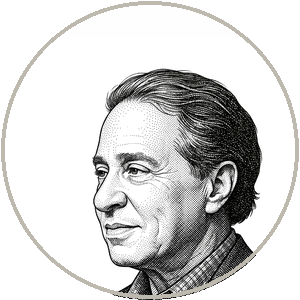 KURZWEIL: My father died at fifty-eight. Heart disease. I was twenty-two, and I watched a specific, irreplaceable mind — a musician, a conductor, a man who heard the world in a way no one else did — simply stop. Not transform. Stop. And I remember thinking, with a clarity I've never lost: this is not acceptable, and the only reason we call it acceptable is that we've never had a choice. I developed type 2 diabetes young myself, reversed it through aggressive intervention, and somewhere in there the whole framework crystallized — that aging and death are engineering problems, and engineering problems yield to information, and information is on a curve. I'm not afraid of death in the trembling way. I'm offended by it. It's a bad design that kills the irreplaceable, and I have spent my life on the proposition that we are about to reach longevity escape velocity — the point where medicine adds more than a year of life expectancy for every year that passes, and the line you were running out of starts running away from you. My father didn't make it. My optimism is, in some real sense, an argument with his grave.
EDO SEGAL: So your immortalism isn't cold futurism — it's grief that refused to convert into acceptance. That's the most human I've heard the Singularity sound. Donna.
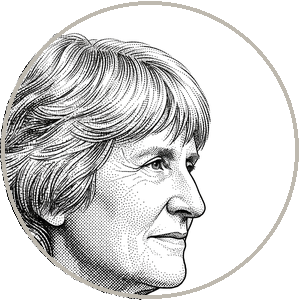 HARAWAY: Mine is almost the inverse, and I've never put it quite this way, so bear with me. As a young biologist I dissected, I watched cells, I watched things die under glass, and what undid me wasn't the dying — it was the continuity. The thing that died fed something. The cell that lysed released what built the next. I understood, viscerally, before I had the words, that I was not a thing that would end but a knot in a flow that would keep flowing. And — this matters — I came up Catholic, and I left the church, but I kept the part where you're dust and to dust you return, except I heard it as a promise, not a sentence. To dust. To soil. To kin. So when Ray says he's offended by death, I understand the grief completely and I think he drew the opposite lesson from the same room. He stood at his father's body and thought never again. I stood at the dying cell and thought this is how it has always worked and I am part of it, and that thought was, strangely, the most consoling of my life. Ray's project is to never be the dying cell. Mine is to be a good ancestor to whatever the dying cell becomes. We are both, I think, answering a death we saw young. We just decided opposite things about whether it was an enemy.
EDO SEGAL: I'll pay my own toll here, because I make everyone else. I have children, and the first time I truly understood I'd die was the first time I understood they would — that I'd handed mortality forward, that the love and the death came in the same package and you could not have one without the other. And I've spent tonight unable to decide whether Ray is offering my children a gift or robbing them of the thing that made my love for them load-bearing. Donna, you'd say the death is the load-bearing part. Ray, you'd say that's the rationalization of a man who hasn't been offered the alternative. Find the beauty in the other's answer for me — Ray, what's beautiful in Donna's dying cell?
KURZWEIL: What's beautiful in it is that it's true now, and it's a wiser way to live inside the constraint than denial or terror. If I'm wrong about the curve — if the escape velocity doesn't come in time — then Donna's way is the only way to die without it poisoning the life before it. I genuinely hope she's the better guide for that, and she might be the guide my own father needed. I just refuse to stop trying to make her wisdom unnecessary.
HARAWAY: And what's beautiful in Ray's offense at death is that it's love. It's love that won't be reasonable. I distrust where it goes, but I'd be a monster to distrust where it starts. He loved his father enough to declare war on the universe. I just think you can love that hard and still bow to the soil — that the bow is not surrender, it's the deepest form of the kinship his grief is reaching for. He wants to keep his father. I want him to become his father, in the old way, by carrying him forward into what he makes. We're closer here than anywhere. We both refuse to let death have the last word. We disagree about whether the last word is "again" or "onward."
EDO SEGAL: Let me hold us in the personal one more beat, because there's a metaphor from my book I've been saving for exactly this temperature. I wrote about the candle in the darkness — that the human mind is a small flame in an enormous dark, and that meaning isn't the absence of the dark, it's the flame against it. The dark is what makes the candle mean anything. Ray, your project, taken to its end, is a proposal to abolish the dark — endless light, no night, the flame that never gutters. Donna, yours is a proposal to honor the dark as the thing that makes the flame precious. So let me ask it as a father, not a host: if you abolish the dark, do you also abolish the candle's meaning? Ray.
KURZWEIL: I think you've given me a beautiful metaphor that quietly assumes its own conclusion, Edo, and I'd charge you for it the way I charge Donna for "just." Why is the dark death specifically? The candle means something against ignorance, against unsolved problems, against the vast unknown of a universe we've barely started to read — and that dark is infinite. Abolishing mortality doesn't abolish the dark; it hands the candle to someone who finally has time to walk further into it. The horizon of what's possible doesn't close when you stop dying — it opens, because the thing that always blew the candle out before you reached the next room was the lifespan. You're mourning the loss of a darkness I'm not proposing to remove. I'm proposing to remove the wind.
HARAWAY: And that's clever, and it's also exactly the substitution I'd flag — Ray quietly swaps the dark-that-is-death for the dark-that-is-the-unknown, because the second one is safe to keep and the first one is the one doing the moral work. The candle means something against death, Ray, not just against ignorance, because you go out. The preciousness of the afternoon, the reason you said immortality might finally let you be present in one — listen to your own answer from before — the preciousness was always borrowed from the fact that the afternoons run out. A flame that cannot gutter isn't braver than one that can. It just doesn't know what it has. I'm not in love with death. I'm in love with what mortality does to attention — the way the last of something makes you finally look at it. Take that away and you don't get an eternity of presence. You get an eternity of postponement, because nothing is ever the last anything, so nothing is ever quite worth looking at all the way.
EDO SEGAL: That's a convergence and I'm numbering it — convergence two: neither of you accepts death as meaningless, and both of your entire systems are, at root, a way of loving someone past it. Hold that, because it changes the temperature of everything that's left. The candle is lit. After the break, what the frictionless future costs — the smooth, and what it sands away.