The Apprentice, the Candle, and the Monoculture
 **EDO SEGAL:** This round begins with a twelve-year-old. In the spring of 2026 a girl asked her mother — and the mother asked me, at a dinner table, with the look parents get now — "Mom, what am I *for*?" Not what should I be. What am I for. She had watched a machine do her homework better than she could, write a story better than she could, and she was doing the arithmetic children do honestly. I've spent two years answering parents in my own way: I tell them the [candle in the darkness](https://www.youonai.ai/fieldguide/med/candle_in_the_darkness) is the asking itself, that the machine is an engine of answers and she is an engine of questions. Tonight I get to stress-test my consolation against both of you. Donna, you've issued the most unusual warning about AI I've heard from anyone of your stature — not superintelligence, not job loss, but something you call the monoculture of the mind. Bring it into this classroom.
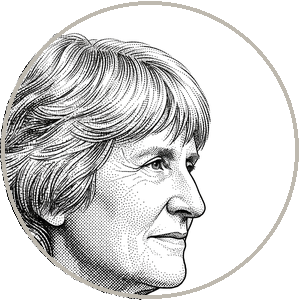 **HARAWAY:** I will, and I want the reader to feel how counterintuitive it is, because the entire public discourse frames the danger of AI as a danger of *excess* — too much power, too much capability, too much intelligence arriving too fast. My danger is a danger of *deficit*. Not too much, but too little: too little diversity, too little friction, too little of the wild, situated, embodied variousness that makes human thought generative rather than merely productive. When millions of minds route their thinking through one system, trained on the same corpus, gravitating toward the same statistical regularities, the cognitive diversity of the whole culture contracts. Not because any individual got stupider, but because the *infrastructure* through which thinking is produced and shared has been narrowed to a single channel — wide, fast, enormous in volume, and a [monoculture](https://www.youonai.ai/fieldguide/med/monocultures_of_the_mind). And a monoculture is the most fragile thing agriculture ever invented. It is efficient and it is one blight away from collapse, because it has thrown away the variation that resilience is made of. So the girl asking "what am I for" — the danger is not that the machine out-thinks her. It's that she, and a billion others, learn to think in the machine's single smooth register, and the species quietly loses the oxbow lakes and backwaters where strange new things used to grow. She's for the variousness. She's for being an irreducibly situated perspective that the monoculture cannot generate.
**EDO SEGAL:** Meredith — the monoculture warning. Does it reach your fight, or is it a humanities worry that the power analysis would set aside?
 **WHITTAKER:** It reaches it, and it sharpens it, and then I'd want to redirect it one degree, because Donna locates the monoculture in the *cognition* and I locate it in the *ownership*, and the second is why the first is so dangerous. Yes — a billion minds routed through one register flattens thought. But ask *why* there's a single channel, and you're back at concentration. The monoculture of the mind is the cognitive shadow of the monopoly of the infrastructure. There is one smooth register because there are five companies, and the reason the child's thinking gets homogenized is the same reason her parents' jobs got transferred upward — because capability flows through infrastructure owned by a handful of actors, and a handful of actors produce a handful of registers. So I'd put it this way: Donna's monoculture is what concentration of power *feels like from the inside of a mind*. And that reframe matters for the cure, because if the problem is cognitive you reach for pedagogy — teach the kid to think for herself. If the problem is structural you reach for the thing that actually breaks monocultures, which is *diversity of ownership* — many models, public models, community models, the right to fork, the refusal of a single channel. You can't pedagogy your way out of a monopoly. You have to break the monopoly.
**HARAWAY:** And here we are going to have our sharpest pedagogical disagreement, because I think you just dismissed the classroom too fast, and the classroom is where I will not yield. Breaking the monopoly is necessary — diversity of ownership, yes, public models, the right to fork, all of it. But suppose you win that fight entirely. Suppose there are a thousand models owned a thousand ways. The child still has to be the kind of creature who can *use* the friction, who can sit in the discomfort of not-knowing long enough for a real question to form. And that capacity is *built*, in a body, over time, exactly where these tools are dissolving the ground — because the machine answers before the question finishes forming. The most important cognitive work of her life is sitting with the stuck-ness, and a frictionless answer-engine paves the place where the higher things grow. So I will not let "break the monopoly" absorb "protect the friction," because a child raised on a thousand smooth models is still a child who never learned to be stuck. The friction wasn't an inefficiency in the curriculum. The friction *was* the curriculum.
**WHITTAKER:** That's fair, and I'll concede the classroom is not reducible to the ownership question — I overreached. But I want to hand you a hard structural fact about *whose* classroom, because the friction argument has a class problem that your tradition should be the first to flag. You say: protect the struggle, preserve the stuck-time, keep the frictionful human teacher in the loop. Wonderful — for the children of the rich district, who get teachers *plus* tools *plus* the discipline to ration the machine. The poor district gets the chatbot *as* the teacher, because it's cheaper, and a headline about access. So the friction you want to protect becomes, in practice, a luxury good. The wealthy child gets productive struggle; the poor child gets the smooth machine raising her. The monoculture won't be evenly distributed. It'll be the education of the people who can't pay for friction. And that's not a pedagogy problem you can solve in the classroom. It's a distribution of power, again, all the way down.
**HARAWAY:** That is exactly right and it is the thing I should have said first, and I'm going to take it and run further than you did, because it implicates the consolation Edo offered. Edo tells the parents: she's for the questions, the asking is the candle. True — and the capacity to ask is not equally resourced. The child with the dinner-table adult who can field the question, the slow conversation, the protected boredom — she gets to become a question-asking creature. The child being raised by the smooth machine because there's no adult with time gets her questions answered into silence before they form. So the candle is real, Edo, and the candle is *distributed*, and a consolation that doesn't name the distribution becomes one more thing the comfortable tell themselves. The friction is the curriculum *and* the friction is a resource being allocated by power, and both of those are true, and the monoculture will grow fastest in exactly the soil that was already most depleted.
**EDO SEGAL:** Let me bring the twelve-year-old back and close the round with her, because you've both now handed her mother something true and something hard. Donna's gift: protect the friction, the stuck-time, the variousness, because the asking-muscle only grows under load — and watch who gets to have the load and who gets the smooth machine instead. Meredith's gift: the friction is being allocated by power, so protecting it for one child means fighting the concentration that rations it from another. Here's what I'd add, father to mother, and I'll let it stand as my own situated knowledge. The answer to "what am I for" was never going to come from the teacher or the tool. It comes from being the kind of creature that asks it — and our job, all of us, parents and builders and the people who own the channel, is to make sure nothing in her world answers it for her so smoothly that she stops asking, and to make sure she is not the child for whom the smooth answer is the only one on offer. The candle is the asking. The justice is making sure every child gets to keep the match. Next, we go back to the screen at three in the morning — the mirror, the feeling of being met, and whether the thing that meets you is a companion, a costume, or a leash. After this.