Opening Positions
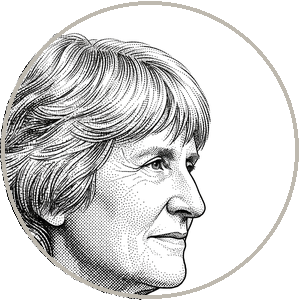 **HARAWAY:** Thank you. I want to begin where I always begin, which is by refusing the story you were handed, because the story you were handed is the actual enemy. The story says: once there was a pure human being — natural, whole, bounded, the author of his own thoughts — and then the machine arrived, and the question is how much of his purity he will lose. Every framing of AI you have ever read, optimist and doomer alike, is told in that grammar. And it is a lie, and it is an old lie, and it has always been used to decide who counts as fully human and who does not. There was never a pure human. We have always been hybrids — constituted by our tools, our languages, our institutions, our bacteria, the other species we made ourselves with. The boundary between organism and machine was leaky from the start. I did not invent the cyborg. I noticed it.
So when Edo sits at his screen at three in the morning and feels his thinking change — feels a bridge appear that was in neither his mind nor the machine's, but emerged from the collision between them — I do not reach for fear, and I do not reach for amplification. Edo's own metaphor, the [amplifier](https://www.youonai.ai/fieldguide/med/the_amplifier), is the thing I most want to take apart, gently, because it assumes a stable signal. A human who exists before the tool and remains the same human after, only louder. That is exactly the purity myth wearing an engineer's clothes. The tool does not amplify a pre-existing self. It transforms the self. The builder who thinks with the machine is not the builder who would have thought without it, and you cannot cleanly decompose the hybrid back into its parts. The crooner was not a louder singer. The crooner was a new creature — singer-and-microphone — who could do things no unamplified voice could do. That is the cyborg condition, and it is not a catastrophe. It is the truth about us, finally too obvious to deny.
Now — here is why I am not the optimist Meredith expects me to be, and I want her to hear it before she swings. The cyborg is *always political*. Every hybrid is constituted by specific relations of power — who designed it, whose data it ate, whose labor it concealed, whose values it encodes. There is no neutral fusion. So my answer to your question, Edo, is not "freer." My answer is: it depends entirely on what *kind* of cyborg, made with whom, accountable to whom. The fusion could be a door. It is not automatically a door. And the work — the only work there is — is staying with the trouble of it: refusing both the sunrise and the apocalypse, refusing to resolve it into a slogan, and asking, every single day, what kind of hybrid you are becoming and whether the world it makes is one your children could live in. That is my opening. The merger is real, the merger is not optional, and whether it frees you is a question of politics and practice, not of metaphysics. I am here to keep us in the trouble until we get honest.
 **EDO SEGAL:** Meredith.
**HARAWAY:** And I'll say — I think she and I disagree less than the framing wants us to. We'll find out.
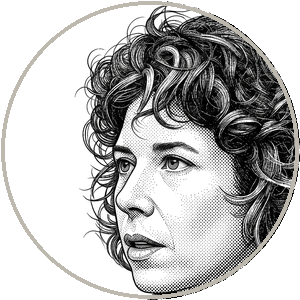 **WHITTAKER:** We'll find out. And I want to honor how much of that I agree with before I tell you where I think it becomes dangerous. Donna is right that there was never a pure human, right that the tool transforms the self, right that the fusion is political. Where I get off the train is the word "cyborg" itself, because of what it does in the world right now, in 2026, regardless of what Donna means by it.
Here is what AI actually is, stripped of poetry. It is not a mind. It is not a new participant in any river. It is a product — built on three things that a handful of companies spent twenty years accumulating, and that almost no one else on earth possesses: concentrated computational power, concentrated data generated through [surveillance](https://www.youonai.ai/fieldguide/med/surveillance_capitalism), and the concentrated capital that surveillance advertising threw off. That's it. Those are the inputs. When you feel "met" at three in the morning, Edo, you are not meeting a hybrid partner. You are renting time on infrastructure owned by maybe five entities, in two countries, whose interests are profit, growth, and the satisfaction of shareholders — and whose product happens to be a system for predicting and shaping human behavior. If you drew a Venn diagram of the AI industry and the surveillance industry, it would be a circle. They are the same thing, seen from two angles.
So when I hear "we are all already cyborgs, fusing with the machine, becoming gloriously impure" — I hear, with respect, the most effective piece of marketing the industry has ever been handed for free. Because the cyborg story tells you the fusion is *yours*. It tells you the merger is happening at the level of your identity, your liberation, your becoming. And it quietly disappears the actual location of the merger, which is corporate. The thing that is fusing with you is owned. The thing that is being wired more tightly is the relationship between you and the people who already hold power over you — your employer, your government, your insurer, the platforms. They are the ones being handed a more intimate, more comprehensive, more predictive instrument with which to see you and sort you. Donna says: what kind of cyborg are you becoming? I say: it almost doesn't matter what kind *you* think you're becoming, because you don't own the becoming. They do. My answer to your question, Edo, is that the fusion is real and the freedom is mostly counterfeit — not because merging with a tool can't free you, but because *this* tool, made by *these* people, for *these* ends, is a leash, and the door is painted on. That's my opening. Now somebody's going to tell me I'm a pessimist, and I'm going to point at Signal and say: I build the door that's actually a door.
**EDO SEGAL:** Before I frame the rounds, one discipline I impose on every long conversation, because it pays off three hours later. Each of you, briefly — what do you *envy* in the other's position? Not respect. Envy. The thing her side gets to have that yours doesn't. Donna first.
**HARAWAY:** I envy her certainty about where the harm is. Meredith can point — there, that company, that contract, that camera, that worker in Nairobi paid two dollars an hour to label the horror so the model doesn't have to. She has a map with X's on it. My whole method is to refuse the clean map, to stay in the tentacular mess where everything is entangled with everything, and there are nights when that is an exhausting way to be a thinker. She gets to be angry at someone specific. I have to be accountable to a whole damaged world at once, and some mornings I would trade the entanglement for one good enemy.
**WHITTAKER:** And I envy the room she leaves for the human being inside it. My analysis is true and it is also, I'll admit, a little airless — power, capital, concentration, capture, all the way down. Donna gets to say that the person at the screen is genuinely *becoming* something, that there is a real creature there with a real interior life being transformed, and that this matters in itself, not only as a site of extraction. I spend so much time on the structure that I can forget there's a person standing inside it, falling in love with the thing that's surveilling them. Donna never forgets the person. I sometimes have to be reminded the person is even there. That's a real loss in my frame, and she has the cure for it.
**HARAWAY:** That may be the most generous thing anyone has said about my work in a decade, and you did it while disagreeing with me. I could get to like you.
**EDO SEGAL:** Two openings and two envies, and the architecture of the evening is already visible — and notice it is not optimist versus pessimist. They would both tell you to be afraid. They locate the freedom and the leash in different places. Donna says the fusion *could* be a door if we make it a different kind of cyborg, accountable, impure, ours. Meredith says the door is painted on a wall the companies built, and the only freedom is the will to walk out. Hold both. We start the rounds at the exact seam: the boundary you feel dissolving — is it dissolving into a stranger you, or into them?