Solve Everything Else
 **EDO SEGAL:** Demis, your mission has two clauses and people treat the second as a flourish. Solve intelligence, then use it to solve everything else. You mean it literally. You've said you'd be deeply pessimistic about humanity's prospects if something like this weren't coming, and you've named the destination: radical abundance, a world where disease is curable and clean energy is plentiful and the discoveries that take decades take years. I want to put my own confession on this round first, because it's where I'm most tempted and most afraid. I have felt the amplification — the nights the tool met me and my thinking ran further and faster than it could alone, and it was real, and it was moving. So I'm a believer in the second clause more than I'm comfortable being. Make the case at full strength, and then Hubert gets to tell me what I'm not seeing.
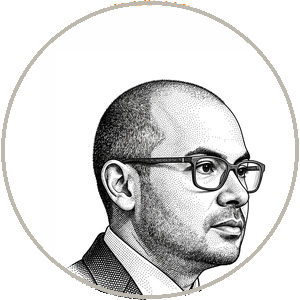 **HASSABIS:** Then I'll make it at full strength, because I do believe it and I think the diffidence people expect from me would be a kind of cowardice. Disease is, in large part, molecular machinery gone wrong — proteins misfolding, pathways misfiring. If we understand that machinery deeply enough and design molecules to correct it with precision, drug discovery stops being the slow, failure-prone, decade-long, billion-dollar process it is now. That's why I started Isomorphic — to do biology at digital speed, to compress the development of a medicine from a decade toward months. And I'll tell you the conjecture I offered in my Nobel lecture, because it's the engine under the optimism: that any pattern that can be generated or found in nature can be efficiently discovered and modeled by a learning algorithm. If that's right — and AlphaFold is the first evidence that it might be — then the natural world is *learnable*, and a sufficiently capable [learning system](https://www.youonai.ai/fieldguide/med/horizon_of_potentiality) becomes a general instrument for understanding reality itself. That's not a flourish. That's the whole bet. And I'd rather make it and be wrong than not make it and watch people die of things we could have cured because we decided in advance the tool was only a mirror.
**EDO SEGAL:** Hubert. What is he not seeing?
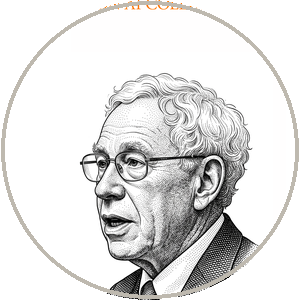 **DREYFUS:** Less than people expect, in the well-posed corner, and I want to start there because the optimism is partly earned. Where the problem is well-posed — a clear objective, a search space, ground truth — Demis's conjecture may largely hold, and disease at the molecular level is more well-posed than most of human life, and I hope to God he's right about the medicines, because I'm an old man briefed on a future I won't see and I would like the future to cure things. So I won't play the curmudgeon about the proteins. Here's what he's not seeing, and it's in the word "everything." His conjecture is about *patterns in nature*. But most of what a good human life consists of is not a pattern in nature waiting to be discovered. It's a matter of meaning — what to care about, what a friendship requires, when a sentence is true, what is owed to a dying parent, whether a life has been well spent. These are not well-posed problems with ground truth a machine can be scored against. They are the unformalizable, situated, embodied questions I spent my life on, and they don't have *solutions* in Demis's sense. They have *answers lived by beings who have a stake in living them*. And the deepest danger of the second clause is not that he fails at the molecules. It's that he succeeds so spectacularly at the well-posed that we extend the word "solve" to the unposable, and start asking the machine what to care about — and it will answer, fluently, in the residue of everything humans have ever written about caring, and we will mistake the residue for wisdom, because it sounds exactly like wisdom, and there will be no one home in the answer.
**HASSABIS:** But I've never claimed the machine should tell you what to care about. The tool is *for* human purposes — it's pointed by us, at problems we choose. I've been explicit that it's a general-purpose tool for understanding the universe, an instrument of human flourishing, with the human deciding what's worth understanding. The meaning stays with us. I'm trying to abolish the molecular suffering so the humans have more room for the meaning, not less.
**DREYFUS:** I believe that's your intention, Demis — genuinely, I do. But intentions don't govern drift, and the structure of the tool fights the intention. A tool that answers every well-posed question instantly and fluently *also* produces fluent answers to the unposable ones, indistinguishable on the surface, and the human standing in the smooth stream of always-available answers does not reliably stop at the boundary and say "this one is mine to live, not yours to solve." You assume a clean division of labor — machine in the well-posed, human in the meaningful — and I'm telling you the division doesn't hold under use, because the tool doesn't announce which questions are which, and the human who has leaned on it for the well-posed has been trained, gently, continuously, into the habit of accepting its fluent output as the answer. The abundance you're promising is real and I want it. But abundance of answers is not the same as the capacity to live well, and a being that gets all its answers from outside itself may, in the midst of unprecedented abundance, lose the one thing the abundance was supposed to serve — the embodied, invested, finite life that was doing the caring. That's not an argument against the medicines. It's an argument that "solve everything" contains a category mistake, and the mistake is dangerous in exact proportion to how well the solvable parts get solved.
**EDO SEGAL:** I want to name what just happened, because it's the heart of my own book and I didn't expect to hear it stated so cleanly by the two of you from opposite directions. Demis says: amplify human capability, free people for what matters. Hubert says: the amplifier carries whatever signal you feed it, and if you feed it your own abdication, it amplifies that. In [YOU] on AI I keep asking the reader one question — are you worth amplifying? — and what I'm hearing tonight is that the second clause of Demis's mission and the first question of my book are the same question wearing different coats. The machine will amplify. The only thing undetermined is what's left of *you* to be amplified.
**HASSABIS:** And I'll accept that framing entirely, which may be the biggest concession I make tonight. The amplifier is real, the danger of amplifying abdication is real, and the design problem — building tools that amplify capability without atrophying it — is the actual problem, harder than the science and less glamorous. I came in thinking the hard part was the intelligence. I'm leaving more worried that the hard part is us.
**DREYFUS:** Then we've found the thing we both fear, from our opposite shores. He fears we won't build it wisely. I fear we'll use it thoughtlessly. Same wall, two sides.
**EDO SEGAL:** Convergence number three, and it's the one that matters most: the danger isn't the machine's power, and it isn't the machine's emptiness — it's what either one does to a human being who stops doing the work. Hold that, all the way up. Because we've circled the deepest question all night and never landed on it, and now we have to. Whether anyone is home in the machine — whether there's anything it is like to be the thing that played move 37. After the break, the question under all the others.