Opening Positions
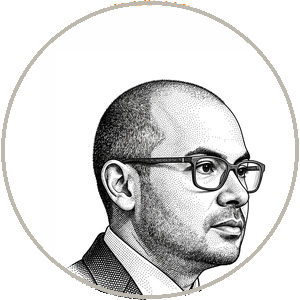 **HASSABIS:** Thank you. I want to start with what I actually do, because the arguments in this field float free of it too easily, and I'm an engineer before I'm anything else. My whole career is one sentence repeated at larger and larger scale: take an enormous space of possibilities, too big to ever enumerate — the positions in a game, the conformations of a folding protein, the moves in a proof — and find the good ones by learning a model of the domain from experience and using that model to guide a search. That's AlphaGo. That's [AlphaFold](https://www.youonai.ai/fieldguide/med/alphafold_objection). When I took a step back in my Nobel lecture and asked what the essence of these systems is, that was the answer, and the thing that still astonishes me is how general it turned out to be. The same shape solves Go and solves biology. It is not a trick tuned to one domain. It is, I think, a glimpse of what intelligence is at the bottom.
Now, the word "intuition," because it's the hinge of the whole evening. A grandmaster doesn't calculate every line; nobody can. She looks at the board and the right move presents itself, and only then does she check it. For three thousand years we called that intuition and treated it as a kind of magic — the part of mastery you can't explain, can't teach, can't write down. Here is what AlphaGo showed. That intuition is a learned function. You can build it. Our system looked at a position and a sense of the right move presented itself, before any deep search, and that sense was good enough to beat the best human alive. We did not program Go knowledge into it. It played itself millions of times and the intuition condensed in the weights — distributed across connection strengths no one can point to, exactly the way a master's intuition is distributed across a brain no neuroscientist can read out. So when Professor Dreyfus says intuition can't be formalized, my answer is: you're right that you can't write it as rules, and you're wrong that it can't be built. We didn't write it. We grew it. And it works.
I'll go further, because I want to give the strongest version. Move 37. The system played a move no human would play, that violated centuries of theory, that the commentators thought was a mistake — and it was deep, and beautiful, and correct. I made a decision during that match to let it pursue its own play rather than rein it in, because we weren't building AI to imitate human thinking; we were building it to explore the boundaries of intelligence itself. That move is the proof of the thing skeptics say is impossible. It is creativity — discovery of something genuinely new, outside the space of human precedent — produced by a learning process with no human intuition behind it to copy. If that's not intuition crossing into the machine, I don't know what the word is supposed to mean.
And then the second clause of my life's sentence, which people treat as a flourish and I mean literally. Solve intelligence, then use it to solve everything else. AlphaFold is the first installment. A problem that defeated the world's biologists for fifty years — the mapping from a protein's sequence to its shape — fell to a learning machine, and we gave the answers away, two hundred million structures, free, used now by millions of researchers. I'd be deeply pessimistic about humanity's prospects if something like this weren't coming, given the scale of what we face: disease, climate, the problems too entangled for unaided human minds. This is a [general-purpose tool](https://www.youonai.ai/fieldguide/med/democratization_of_capability) for understanding the universe. It is dual-use and genuinely dangerous, and I've signed the statements saying so. But the danger and the power are the same fact seen from two sides, and the worst thing we could do is talk ourselves out of the power because we're frightened, or pretend the thing isn't really intelligent because that's more comfortable. It's intelligent. I can measure it. That's my opening.
 **EDO SEGAL:** Professor Dreyfus.
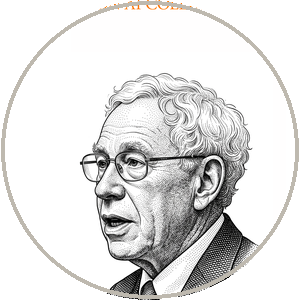 **DREYFUS:** That was very good, and I agree with more of it than Demis expects, and the part I reject I reject completely. Let me start where he started, with what he actually does, because half of it is the best evidence I have ever had for my own position.
For thirty years I argued against a project that tried to capture intelligence in explicit rules and atomic facts — symbolic AI, the dream that you could write down enough representations of the world and enough rules for manipulating them and thereby build a mind. I said it would fail, and I said why: the frame problem, the impossibility of specifying in advance what's relevant; the [unformalizable background](https://www.youonai.ai/fieldguide/med/the_background_searle) of tacit familiarity that every competent adult brings to every situation; the fact that a master's skill is not propositional, not a stock of true sentences, but a bodily attunement built through a history of coping. And it did fail, exactly there. Now — listen to what Demis just told you. *We didn't write the rules. We grew the intuition. You can't write it down.* He just conceded my entire central thesis. The machines that work are the machines that abandoned the project I attacked. They don't follow rules. They learn patterns. That is my argument, vindicated by the people who were furious at me, and I'd be petty if I didn't enjoy it, so I'll enjoy it for one sentence and then take it away from him.
Because here is what the concession costs him. Granting that intelligence isn't rules is not the same as granting that this machine has intelligence. Dreyfus's positive view — Merleau-Ponty's, really — was that skilled coping acquires the power to respond to situations of a certain general form, through an embodied engagement with a world that matters to the agent. The expert sees the right move because she has a body that has been *in* ten thousand games, invested, caring whether she won, afraid of losing, her whole organism shaped by the friction of it. The understanding is not in a representation she consults. It is in the involvement. Now look at AlphaGo. It has no body. It has never wanted to win. It has no stake in the game, no fear, no afternoon it remembers, no world the board opens onto. It played millions of games against itself and felt nothing in any of them, because there is no one there to feel. So when Demis says the intuition "crossed into the machine," I say: you built a system that produces the *output* an intuition would produce, stripped of everything intuition is. You have the residue of mastery without the mastery. The wake without the boat.
And move 37 — I've thought about this carefully, because it's the strongest thing he has, and I won't wave it away. The move was new, it was good, it was outside human precedent. Grant all of it. But notice what's not in it. The system did not *understand* it was being creative. It did not know it was playing Go, in the sense of grasping what a game is, why Lee Sedol's hands trembled, what it means that a thing humans loved for three thousand years had just been deepened by something with no stake in loving it. It optimized a number in a closed world with complete rules and an unambiguous winner — which is precisely the kind of world I always said the machines would conquer, because it's the world stripped of everything that makes the real world hard. The genius was in choosing a domain where there's no background to inhabit, no body required, no meaning at risk. Move 37 isn't intuition crossing into the machine. It's a demonstration that in a world small enough and clean enough, you don't need a mind to play it perfectly. The bear is still out there. We'll get to the bear.
**HASSABIS:** I want to come back to "closed world," because it's doing enormous work and it's already false. But this is your opening, finish it.
**DREYFUS:** I'll finish on the second clause, the *solve everything else*, because that's where the closed world stops being closed and my worry stops being academic. AlphaFold is magnificent and I won't pretend otherwise — it is the best case Demis has, far better than the games, and we'll spend a whole hour on it. But notice that even there, what the machine does is find structure in a space governed by physics, scored against ground truth that human experimenters spent decades measuring. It is a [discovery in a well-posed problem](https://www.youonai.ai/fieldguide/med/discovery_problem). Now extend the dream — solve disease, solve the economy, solve the human things — and you leave the well-posed world and enter the one I spent my life on: the world of relevance that can't be specified, of meaning that depends on a form of life, of judgment that lives in a body. My fear is not that Demis fails. My fear is that he succeeds spectacularly in the well-posed corner and we mistake it for general success everywhere, and we hand the unformalizable parts of a human life — what to care about, what a good life is, when a sentence is false — to a system that has the shadow of those things and not the substance. That's the first step fallacy, and it has run every previous decade of this field, and I am told I have been briefed on enough of the present to say: it is running again.
**EDO SEGAL:** Before I frame the rounds, one discipline I impose on every long conversation, because it pays off three hours later. Each of you, in a few sentences — what do you *envy* in the other's position? Not respect. Envy. The thing his side gets to have that yours doesn't. Demis first.
**HASSABIS:** I envy the patience. Professor Dreyfus gets to stand still and ask what a thing *is*, and hold the question open for fifty years, and be vindicated slowly. I don't have that luxury. I'm in a race — a ferocious one — and the systems arrive faster than the understanding of them, and I have to make decisions about deployment and safety on a timescale that doesn't wait for the philosophy to settle. He gets to be right eventually. I have to be right now, or someone less careful is right instead of me. There are nights I'd trade the whole laboratory for the chair he's sitting in.
**DREYFUS:** And I envy the evidence. I spent decades making an argument and pointing at failures, and the failures were always *absences* — the thing the machine couldn't do, which is the weakest kind of proof, because tomorrow it might do it. Demis points at a folded protein and a Nobel Prize. He gets to put a thing on the table. My whole case is that something is missing, and you cannot put a missing thing on a table. He has the structures. I have the seam where they fail, and a seam is harder to show than a structure. I've envied that my entire career — the people building it always had the demo, and I only ever had the warning.
**EDO SEGAL:** Two openings and two envies, and you can already see the architecture of the evening. It isn't that one of them loves the machine and one fears it — Demis fears it too, he signed the extinction letter. It's that they locate the *miracle* in opposite places. Demis says the miracle is that intuition turned out to be buildable. Hubert says the miracle is a counterfeit, and the danger is that we can't tell. Hold both. We start the rounds at the exact seam — at the move in Seoul, and what, precisely, was in the machine when it played it.