The Crossing

 EDO SEGAL: The rules of this round are short. Each of you questions the other, directly. I will not rescue anyone. Two and a half centuries, one table, no referee. Dr. Pearl — you've waited two hundred years for this man to be in the room. Begin.

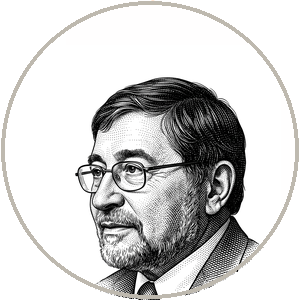 PEARL: Mr. Hume. You have spent this evening dissolving everything — cause, the self, the counterfactual's foundation — into custom, into habituated conjunction. And you do it beautifully. So here is my question, and I want the answer, not the elegance. By your own philosophy, how do you account for the fact that your dissolutions are true? You claim that the necessity in causation is only felt habit. But that claim is itself a claim about how the mind actually works — a claim you expect me to accept because you have given reasons, because you have correctly modeled the mechanism of belief-formation. You are, in the very act of denying that we grasp mechanisms, grasping a mechanism — the mechanism of habit — and asking me to credit your grasp as knowledge and not mere custom. So either your own theory is just your habit, in which case I have no more reason to believe it than to believe the rooster wakes the sun — or you really did understand something about the mind, climbed to a rung above mere association to see the structure of association itself, in which case the third rung exists and you are standing on it while denying it has a top. Which is it, Mr. Hume? Is your skepticism knowledge, or is it only your habit? You cannot have it both ways, and I have wanted to ask a Humean that for thirty years.

 HUME: [pause] That is the oldest and best blade pointed at me, and I will not duck it, because ducking it would be the one thing my philosophy forbids. You have caught the reflexive turn — that a skeptic about reason saws the branch he sits on. Here is my answer, and it is not a trick. My account of the mind is itself a piece of custom — a disposition formed in me by long and careful attention to the conjunctions of my own thinking, refined by conversation and revision. I do not exempt it. It is not knowledge of a different and higher kind; it is custom that has been unusually well-tended, exposed to more cases and more correction than the careless habits it diagnoses. When I tell you the necessity in causation is felt habit, I am not reporting a truth grasped from some rung above the fray. I am reporting where my best-corrected expectation has settled after a lifetime of watching minds, including my own. So you ask: is your skepticism knowledge or habit? I answer: there is no third thing for it to be. It is habit — the very best habit I could form — and that is all any claim ever is, including yours about the ladder. The difference between us is not that you have knowledge and I have habit. It is that you believe one of your habits has climbed out of the category of habit, and I deny that any habit ever does. My theory does not refute itself, Dr. Pearl. It includes itself. It is the one philosophy honest enough to apply its own verdict to its own verdict — and find, with perfect consistency, that it too is only the world's best-corrected conjunction. You wanted me to choose between knowledge and habit. I am telling you the choice is the illusion. There was only ever habit. Mine has simply been more careful than most.

PEARL: [long pause] That is consistent. I grant you it is consistent. And it is also, I think, the most expensive consistency in the history of thought, because look what it costs you — it costs you the ability to say that any belief is better than any other, except by the standard of being "better-corrected," which is itself just a more-favored habit. You have purchased perfect immunity from refutation and paid for it with the distinction between truth and persuasion. Now mine. My second question. You say there is only habit, more or less corrected. Then tell me — what corrects it? When your expectation is "well-tended," what does the tending? You used the word "correction" three times. Correction implies a standard the habit is brought into line with — something outside the habit that the habit can be wrong about. What is that something, Mr. Hume? Because the moment you admit that habits can be corrected against the world — that the world pushes back and your expectation yields — you have admitted the second rung: intervention, the world as something you act against and learn from, not merely watch. You cannot have correction without a world that resists. And a world that resists is a world of mechanisms. Your "well-corrected custom" is my causal model with the serial numbers filed off.

HUME: [pause] Ah. [pause] You have driven me to the exact place I least like to stand, and I respect the driving. What corrects the habit? Experience corrects it — the world delivers an impression that violates the expectation, and the expectation yields. You are right that this requires a world that pushes back, and you are right, I will now say it plainly, that intervention — acting and being resisted — is a more powerful corrector than passive watching, as the child at the high chair showed us. So I concede, here, at the crossing, that correction presupposes a world that resists, and that the resisting world is not nothing — it is the source of the pressure that shapes custom toward reliability. What I will not concede is the last step, the one you most want. That the resisting world is a world of mechanisms we grasp. The world pushes back; granted. But what we make of the pushing — the structure, the arrows, the model — is still our construction, still custom organizing impressions, still on our side of the glass. You have shown me the world resists. You have not shown me that our model of how it resists is anything but the most useful habit we have formed about the resistance. The world is real and it corrects us. I never denied the world. I denied that our idea of its machinery is more than habituated expectation. You have moved me — I will own it before the reader — from "there is only habit" to "there is habit, and a world that corrects it." That is further than I came to this table willing to go. But the model of the machinery remains, to the end, our own — and that last inch is the whole of the disagreement, and I will die on it, as I have already done once.

EDO SEGAL: [quietly] I have to mark what just happened, because the reader can't see it and it's the center of the book. Dr. Pearl asked the question that has felled Humeans for two centuries, and Mr. Hume did not fall — he absorbed it, by applying his skepticism to his skepticism. And then Pearl asked the second question, and Hume moved — conceded a world that resists, conceded intervention corrects better than watching — and stopped, at the last inch, on whether our model of the machinery is knowledge or habit. [long pause] Mr. Hume, you have one question left for him. Make it count.
HUME: I will. Dr. Pearl — you have insisted all evening that the model is real, that the mechanisms are grasped, that the third rung is a genuine place to stand. I have conceded more of your ladder than I expected to. So here is my question, and it is the one I have saved. You said the world corrects our habits by resisting. Then your causal models are corrected by the world too — they are revised when the world pushes back against them. Which means your models are also provisional, also held by a kind of trust that the world will go on resisting in the ways it has, also — forgive me — a species of custom, the best-corrected kind, exactly as I described my own beliefs ten minutes ago. So I ask you what you asked me: is your causal model knowledge, grasped from some rung above all habit — or is it only the world's best-corrected conjunction, your habit and mine differing not in kind but in care? Because if you say it is knowledge of a higher kind, I will ask from what impression you derived the higher kind, and you will not find one. And if you say it is the best-corrected habit — then welcome, Dr. Pearl, to my circle, which has been your home all along, and the only quarrel between us was whether you would admit the address.

PEARL: [long pause] Then I will admit the address and dispute the lease. Yes — my causal models are provisional, revisable, corrected by a world that resists. I have never claimed otherwise; a model is a conjecture, and conjectures are corrected. So in that sense, fine — they are "best-corrected habits," and I live in your circle. But here is why the address is not the argument. Within your circle, Mr. Hume, there are two kinds of tenant, and the entire evening has been about the difference between them, and you keep trying to dissolve it by pointing out that they share a street. One tenant holds correlations — habits about what goes with what — and is helpless before any question about doing or imagining. The other holds mechanisms — habits, fine, but habits structured as arrows, organized so they can answer interventions never observed and counterfactuals that contradict the data. Both are provisional. Both are corrected by the world. Both are in your circle. And one of them can fly the airplane and cure the patient and tell you what would have happened, and the other cannot. So you have won the metaphysical point — there is no knowledge outside corrected habit — and it is the most barren victory I have ever seen, because it cannot tell the two tenants apart, and telling them apart is the only thing that has ever mattered. I concede I live in your circle. I deny that living in it makes the rungs equal. You have proved we are all habit. I have proved that some habits climb. We are both right, Mr. Hume — and only one of our rightnesses can build a thing that knows the rooster does not wake the sun.
EDO SEGAL: [long pause] And there — after the whole evening — the two of you are holding opposite ends of one sentence: that we are all habit, and that some habit climbs. Neither could say it alone. We close after this. The last word, each of you.