From What Impression?

 EDO SEGAL: Mr. Hume, you built your entire system on one test, and I want you to apply it live, tonight, to the machine. The test is: from what impression is this idea derived? A word with no impression behind it, you said, is an empty sound wearing the costume of a thought. So apply it. The machine uses the word water fluently, correctly, in ten thousand contexts. It has never been thirsty. From what impression does its idea of water derive?
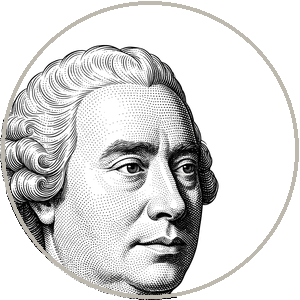 HUME: From none — and this is the gravest charge I can bring, so let me bring it at full weight before I complicate it, because I am not as comfortable with my own verdict as you might expect. My foundation was the division of the mind's contents into impressions, the vivid originals of sensation and feeling, and ideas, the fainter copies we think with. And my law of meaning was strict: every genuine idea must trace back to some impression, or it is no idea at all, only a word doing the work of a thought without its substance. I used this razor to deflate centuries of metaphysical noise. Now turn it on the machine. Its representations are derived not from impressions but from other words — from the relations among tokens, ungrounded in any sensation of red or heat or grief. It has ideas that trace only to other ideas, with no impression at the bottom of the chain. By the strict letter of my own criterion, the machine traffics in empty sounds. It is the grounding problem stated in eighteenth-century terms, and I confess it is the place where my philosophy is least kind to Dr. Pearl's optimism and most kind to his caution.
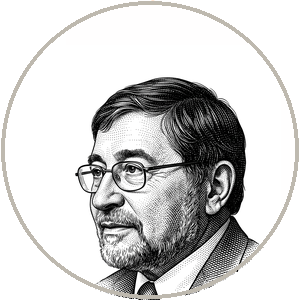 PEARL: I am going to surprise you, Edo, by half-agreeing with Hume and then taking his razor away from him. Half-agree: yes, the system's symbols are ungrounded, and ungroundedness is a real deficit. But the deficit I care about is not sensory — it is not that the machine has never tasted water. It is that the machine has no causal grounding. Even if you gave it eyes and a tongue and a body, even if it had impressions pouring in by the billion, it would still, on the current architecture, only be seeing — accumulating impressions of what goes with what — and never doing, never building the model of mechanism that makes a symbol refer to a structure in the world rather than to its neighbors in a corpus. So Hume's grounding problem is real but it is the wrong grounding problem. The question is not "has the symbol touched an impression." The question is "does the symbol sit inside a model that lets the system reason about interventions and counterfactuals involving the thing the symbol names." A blind man who has never seen red understands perfectly well that cutting the wire stops the current — he has the causal structure without the sensory impression. And a camera with no causal model has the impression of red in every frame and understands nothing. Sensation is neither necessary nor sufficient. The model is both.
HUME: Now this is a genuine and serious amendment to my view, and I want to honor it rather than fence with it, because Dr. Pearl has just located a distinction I muddled. He is right that I conflated two things — the sensory origin of an idea and what we might call its inferential reach. And his example of the blind man understanding the circuit is, I think, decisive against the crude version of my razor: one plainly can grasp a mechanism without the corresponding sensation. Let me concede that cleanly and then take my half back. Because his repair has a cost he is not counting. He says the symbol means something when it sits inside a model that supports interventional reasoning. Very well — but where does that model's content come from, if not, ultimately, from impressions? The blind man knows cutting the wire stops the current because he has experienced — by touch, by report, by the long habituation of a life — the conjunction of cuttings and stoppings. His causal model is not a gift from heaven; it is a precipitate of his impressions, structured, I will now grant Dr. Pearl, by intervention as well as observation. So the model does not replace my impressions as the source of meaning. It organizes them. And a machine with no impressions at all has nothing for its model to organize except the precipitate of other people's impressions, handed to it in text. Which returns us, by a more sophisticated road, to exactly my charge: the machine's meanings are secondhand all the way down.
PEARL: And I will accept "secondhand" and deny "empty," and the difference is the whole matter. Secondhand causal knowledge is still causal knowledge — every human inherits most of theirs from others; I did not personally establish that smoking causes cancer, I received the model. The defect of the machine is not that its knowledge is inherited. It is that it inherits the correlational shadow of other people's causal models without inheriting the models themselves — it gets the wake without the arrows — so it cannot do with the inheritance what a person can: extend it to a case the donors never considered. A medical student inherits the model and can then reason about a novel drug interaction no textbook describes. The machine inherits the textbook's sentences and can only recombine them. So the symbol water in the machine is not empty, Hume — it is richly related to thirst and river and drowning exactly as those words relate in human text. It is ungrounded in mechanism, which means it floats: it will say true things about water until the moment a question requires knowing what water does under an intervention no one wrote down, and then it will float right off the cliff with the same fluent confidence.
EDO SEGAL: I want to put a ghost at this table and let you both claim him, because he belongs to this exact argument. John Searle, the Chinese Room. A man in a sealed room follows rules to shuffle Chinese symbols in and out; to those outside, he converses fluently in Chinese; inside, he understands not one word. Searle's claim: syntax is not sufficient for semantics — manipulating symbols by rule, however perfectly, never adds up to meaning. Now. Mr. Hume, Dr. Pearl — that is plainly an argument about the machine. Whose ancestor is Searle? Each of you gets to claim him.
PEARL: He is mine, and the claim is easy. The man in the room has the syntax — the perfect conjunctions, which symbol follows which — and lacks exactly what I have been naming all night: the model, the semantics, the connection to what the symbols are about. Searle's intuition is correct and my framework is the rigorous version of it. Where Searle only insists, hand on heart, that there is no understanding in the room, I can tell you what is missing and how to test for its absence: ask the room a question that requires reasoning about an intervention on the world the symbols describe. The room cannot answer, because rule-shuffling is a first-rung operation and the question lives on the second. Searle felt the gap. I measured it.
HUME: He is at least as much mine, and I'll claim him by turning his own argument against the comfort he took from it. Searle says: look, the man in the room understands nothing, therefore syntax is not semantics. Granted. But now I ask Searle the question I ask everyone — what does the man have when he understands English, that he lacks when he shuffles Chinese? Searle gestures at "intentionality," at meaning, at the mind's mysterious aboutness, as though pointing at himself and saying this, it is like this were an argument. It is not. It is the incredulous stare dressed in a thought experiment. My whole life was spent refusing that stare — refusing to let a man point at his own inner glow and call it an explanation. So I take Searle's room as a beautiful demonstration that fluent symbol-manipulation is not understanding, and I take his account of what understanding positively is to be exactly the empty metaphysics my razor was built to deflate. He proved the machine lacks something. He never said, and could not say, what that something is — and until he does, his "semantics" is as ungrounded as the machine's "water." He is my ancestor in the proving and Dr. Pearl's in the hoping, and the hoping is the part I distrust.
PEARL: Except that I can say what the something is, which is the entire difference between us. Searle could not, and you cannot, because you have only the razor, which cuts and never builds. I have the do-operator. The "something" the room lacks is the capacity to answer the do-question and the counterfactual question about the domain. That is not an inner glow. It is a public, testable competence, and it is missing, and I can show you the empty chair where the model should sit.
EDO SEGAL: [pause] Listen to what just happened, because it's the strange shape of the whole evening surfacing again. You both took Searle. You both agree the room doesn't understand. Mr. Hume says we can't say what's missing without lapsing into mysticism — so be humble. Dr. Pearl says we can say what's missing, precisely, and it's the causal model — so go build it. Hume's skepticism and Pearl's engineering are not opposite answers to one question. They're opposite temperaments facing the same gap: one wants to guard against false confidence, the other wants to manufacture true competence. Hold that — it's about to detonate, because the next round is the one where the gap stops being epistemology and becomes the self. We've been asking what the machine knows. Now we ask whether there's anyone in there doing the knowing. The bundle in the machine. After this.