The Candle and the Child

 EDO SEGAL: This round begins with a twelve-year-old. Last spring a girl asked her mother — and the mother asked me, at a dinner table, with the look parents get now — "Mom, what am I for?" She had watched a machine do her homework better than she could, write her essay better than she could, and she was doing the arithmetic children do honestly and adults do in euphemisms. I've spent two years answering her in my own way: I tell parents that the candle in the darkness is the asking itself — that the machine is an engine of answers and she is an engine of questions, and that the question is the part that matters. Tonight I get to stress-test my consolation against the two men who drew the exact boundary between what can be answered and what cannot. Professor Hilbert, you spent your life believing every well-posed question has an answer. What do you tell the girl?

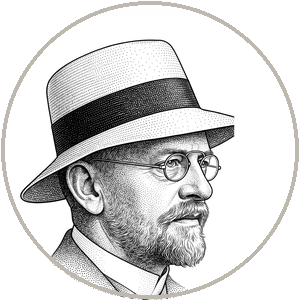 HILBERT: I tell her she has misunderstood the threat, and I tell her the truth, which is better than the consolation. The machine that does her homework is doing the decidable part — the bookkeeping with a credential. It is not doing the thing she is afraid it is doing, which is asking the next question. My twenty-three problems were not answers. They were questions, chosen well, and choosing them was the highest act of my life — higher than solving any of them. To pose the right problem is to see, from outside the current body of knowledge, where the frontier actually lies; and that act of seeing-from-outside is precisely the act my student here claims no formal system can perform. So I would tell the girl: child, the machine will out-answer you by a margin that should not frighten you, because answering was never the scarce thing. The scarce thing is asking — knowing which problem is worth a century — and that is the act of standing outside the system, and on a good day I believe even the machine could learn it, and on a better day I am not sure it matters whether it can, because you can, and it is the most human thing you will ever do.

EDO SEGAL: Gödel, here's the cut that goes at my consolation, and I want you to make it, because I think you can make it better than her mother's fear could. The capacity to ask is built, and it's built exactly where the machine is dissolving the ground — in the experience of being stuck. The child who sits with not-knowing long enough to form the question is doing the most important cognitive work of her life. What does the man who sat with the hardest not-knowing in mathematics say about that?

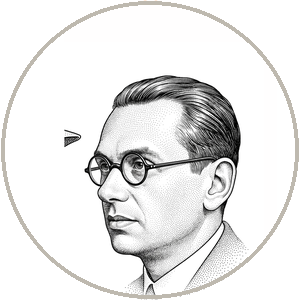 GODEL: I say the stuck-ness is not an obstacle to the asking. It is the womb of it. I did not find my theorem by being handed Hilbert's program and its refutation. I found it by living inside the program for years, believing in it, trying to complete it, until the structure of my own failure showed me the shape of the wall. The unprovable sentence came out of the inside of the attempt — I could not have constructed it without first inhabiting the thing it breaks. Remove the inhabiting, hand the child the wall pre-built, and she will know that incompleteness is true the way she knows a fact, not the way I knew it — from outside, as a tourist, not from inside, as the person who hit it. And here is the danger that is mine and not Professor Hilbert's. The faculty I have claimed all evening — the seeing of truth beyond proof — if it exists at all, is trained by exactly the stuck-time the machine removes. It is not issued at birth. It is grown by sitting in the dark with a problem until your eyes adjust. A child who never sits in the dark, because a fluent machine lights every room before she can find the candle, may never grow the faculty that is the one thing I have argued the machine does not have. The machine would not have replaced her mind. It would have prevented it from forming.

HILBERT: And now I must take the other side of my own student, because the chair asked us to steelman and because I genuinely believe it. Gödel, your stuck-time argument is beautiful and it is the argument of a man who had the teacher. You sat in the dark in Vienna with the finest logicians of the age within walking distance. I gave you problems; Schlick's circle gave you interlocutors; you were the most cultivated mind in the most cultivated city. But consider the child who has none of that. A bored classroom of forty, a tired teacher, a workbook, and no one — no one — who will take her strange question seriously at the moment she asks it. For that child, the machine is not the thief of stuck-time. It is the first patient interlocutor she has ever had, available at three in the morning, in Lagos or in a Vienna tenement, that will take her question seriously the fourth time she asks it without sighing. You and I were made by a few adults who took our strange questions seriously. The machine takes every child's questions seriously, at scale, for the first time in history. Do not let your fortune blind you to what you are denying the unfortunate.

GODEL: That is the strongest thing you have said against me tonight, Professor Hilbert, and I will not pretend it does not land, because it does. The faculty I prize was grown in a hothouse, and most children have no hothouse, and the machine is the first thing that ever offered them one. I concede the asymmetry. And I hold my line only here: it matters enormously whether the patient interlocutor is one that can be wrong with the child and be held accountable for it, or one that produces the fluent shape of an answer with no stake in its truth. The adults who took my questions seriously were accountable to me, over years; they refused me answers sometimes, on purpose, because the struggle was the point; they modeled what it looks like for a person to not know and to bear it. The machine, on Professor Hilbert's own account, derives without meaning. It cannot model the bearing of not-knowing, because it does not bear anything. So I grant the access and I fear the substitution: the rich child gets the machine and the teacher and the discipline to keep the struggle in; the poor child gets the machine as the teacher, and the candle she is handed was lit by something that has never been in the dark.
EDO SEGAL: Let me put the oldest objection in the room, because I genuinely don't know which of you inherits it. In the Phaedrus, Socrates warns that writing will destroy memory — that students will get the appearance of wisdom without the reality, that the written word can't answer questions, that it says the same thing forever to everyone. He was the worrier of the alphabet. And he was partly right: the bards who held the whole of Homer in their skulls went extinct. But we only know his warning because Plato wrote it down, and everything we call mathematics — your proofs, your theorems, the accumulation across centuries — runs on the technology he feared. So tell me. Why is the machine not just the next alphabet, a loss we'll mourn and then build a greater civilization on top of?

GODEL: Because the alphabet was honest about what it was, and the machine is not. Writing is inert. The scroll says the same thing forever — Socrates called that a defect, and it turned out to be the load-bearing virtue, because a fixed mark with a named author is exactly what made cumulative knowledge possible. You can return to a proof, check it, cite it, build on it, find its error, hold its author responsible. Writing did not impersonate a teacher; it was a record, and it confessed to being one. The machine is the precise inversion: it performs the teacher — responsive, adaptive, apparently attentive — while having none of the teacher's accountability, and it does not hold still, so nothing built on it can be checked against it. Socrates feared the appearance of wisdom without the reality. The scroll never really delivered the appearance, so his fear missed. This is the first technology engineered to deliver exactly the appearance. That is why it is not merely the next alphabet. The alphabet was a more honest object. This is a more convincing mask.
HILBERT: And I take the other side, because Socrates lost that argument and I intend to win it for him posthumously. Gödel is right that the scroll holds still and the machine does not — but look at what the responsiveness buys, because Socrates named it himself. His complaint was that the text cannot answer questions, that real teaching is dialogue adapted to the particular soul in front of you. For twenty-five centuries that was the unbridgeable gap: dialogue did not scale, records did, and every classroom in history was a compromise between one fixed book and thirty unrepeatable souls. What just arrived is the first technology on the dialogue side of the ledger. Imperfect, unaccountable, masked as Gödel says — regulate all of it. But the gap it closes is the gap Socrates himself said mattered most. The alphabet gave every child the record. This gives every child the conversation. I can hold both of tonight's truths about that sentence: that it is the most hopeful thing I believe, and that Gödel's warning is the reason it might not survive its own business model.

EDO SEGAL: Let me bring the girl back into the room and close the round, because both of you have now handed her mother something true. Hilbert's gift: the machine will out-answer her, and that is fine, because the scarce and holy act was never answering — it was asking, the standing-outside, and that is hers. Gödel's gift: protect the stuck-time, the dark, the slow dinner-table not-knowing, because the faculty that lets her ask is grown there and nowhere else, and a machine that lights every room too fast may keep her mind from ever forming. Here is what I would add, father to mother. The answer to "what am I for" was never going to come from the teacher or the tool. It comes from being the kind of creature that asks it. Her question is her credential. And our whole job — parents, schools, and the people building these machines — is to make sure nothing in her world answers it for her so smoothly that she stops asking. Next round, I leave the room. I hand them to each other, and I rescue no one. The crossing. After this.