We Must Know, We Will Know

 EDO SEGAL: Professor Hilbert, at the end of your career, made an honorary citizen of the Königsberg you'd left decades before, you recorded a short radio address. It closes with the words now carved on your tombstone in Göttingen. Wir müssen wissen — wir werden wissen. We must know — we will know. The recording survives. You can hear, at the very end, a brief laugh after the final word, as if at the audacity of saying it. And the timing is almost too cruel to be real — you said it within a day of Gödel's result being aired in the same town. The faith and its refutation share a calendar. So I have to ask, plainly: when you said "we will know," did you mean it as a fact about the world, or as a vow?

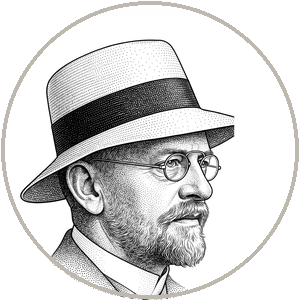 HILBERT: You have asked the only question about that sentence worth asking, and no one asked it while I was alive. I will tell you the truth. I meant it as both, and I no longer believe a fact and a vow are as different as you think. "We will know" is not a prediction I could have proven — Gödel saw to that, the day before, in my own city. It is a stance. It is the refusal of ignorabimus — the refusal to accept that any question is permanently closed. And the laugh you hear on the recording is not the laugh of a man who has proven something. It is the laugh of a man who knows he is making a wager with his whole soul, against an opponent who may have already won, and who is choosing to wager anyway because the alternative — the resignation, the we shall not know — is a kind of death he refuses to die. Was it a fact? No. Was it a vow? Yes. And here is what your machine age must understand: every great advance was built by people making that vow before they had the right to. The vow is the engine. The fact is the wreckage the engine leaves, some of it triumph and some of it Gödel.

EDO SEGAL: Gödel, that's a hard thing to argue against, because he just conceded it isn't a fact. He's saying the optimism is productive precisely because it outruns its warrant. Your move.

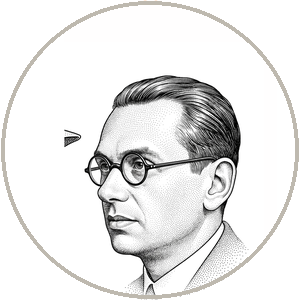 GODEL: And I would not argue against the vow, because the vow built my field and gave me a master to revere. I argue against the vow worn as a fact — and that is exactly what your industry does, Mr. Segal. Professor Hilbert, in this room, is honest: he calls it a wager. But when his optimism is transposed into a server farm, the laugh disappears and the wager hardens into a roadmap. "We will know" becomes "the model will eventually know," and the eventually is presented as physics rather than faith. Here is the precise structure of the warning, and it is sharper than the usual hand-wringing about machines growing too powerful. The warning is not that we will succeed too well. It is that some of what we confidently pursue may be, like Hilbert's complete and self-consistent mathematics, impossible in the form we are pursuing it — and the impossibility may be provable rather than merely difficult. There genuinely is an ignorabimus for formal systems. Not a failure of effort. A theorem. The most rigorous optimist in history was refuted by rigor itself, and the people building these machines are reanimating his optimism while ignoring the part of his story where it was proven partly false.

HILBERT: But you have just done the thing I forbade in the rules, Gödel, and I am calling it. You said "ignoring the part where it was proven partly false." Partly. Sit on that word, because it is the whole disagreement. My optimism was proven partly false. Partly. The part that says one fixed system settles everything — false, proven, conceded, carved into my own defeat. The part that says there is no permanent wall to how far reasoning can climb by building system upon system — that part you did not refute, and you admitted as much in your opening when you said you do not know which of your two doors we stand in. So when you tell the public my optimism was "refuted by rigor," you are doing exactly what you accuse the industry of: wearing a partial theorem as a total verdict. I will hold to the rule and say it cleanly. You proved no single ladder reaches the top. You did not prove the climb has a top. Those are different sentences, and the difference is the most important thing in this room.

GODEL: That is correct, and I accept the correction, because the rule binds me as it binds him. I did not prove the climb has a top. I proved that every stage of the climb has a truth that stage cannot reach, and that reaching it requires standing outside that stage. Whether the succession of all such standings-outside has a limit, whether "we will know" is true in the limit of all possible ladders — that I did not settle, and I will not pretend I did. Here is the most honest thing I can give you, Professor Hilbert, and it is a concession. My theorem is consistent with your optimism if the climbing is done by something that is not, itself, any single formal system — something that can keep stepping outside. The question of whether the machine is such a thing, or whether only a mind is, or whether nothing is and we are all walled in — that is undecided. Your "we will know" survives my theorem on exactly one condition: that the knower is not a machine in my sense. Which is, I notice, the most interesting possible thing for my theorem to imply.
EDO SEGAL: Before I let you off that hook, Professor Hilbert, I want to put the modern form of your optimism in front of you in its own words, because the people who hold it would say they have evidence you never had. They point to the scaling curves — the empirical regularity that as these systems get larger, trained on more data, they get reliably, predictably more capable, and that capabilities keep emerging at scale that nobody programmed and nobody predicted. They say: Hilbert only had a vow, but we have a trend line, and the trend line is the most reliable thing our field has ever produced. Does the trend line make the vow into a fact?

HILBERT: It makes the vow into a better vow, and I will take it gladly, but it does not make it a fact, and here I am with Gödel against my own admirers. A trend is an observation about the past dressed as a promise about the future. I have seen more trends break than the people quoting them have been alive to watch. Every extrapolation is a wager that the channel the river has been carving will not hit bedrock — and bedrock, Gödel has shown, is real and lies somewhere. The scaling curve tells you the territory of the decidable is vast and you have not exhausted it. It does not tell you the territory is infinite, and it cannot tell you that, because no finite stretch of curve distinguishes "rises forever" from "rises until the wall." So I say to the trend-line men what I would not say to the resigned: your evidence is real, your climb is real, climb on — but do not mistake the steepness of the slope you are on for proof that there is no summit. That is not optimism. That is forgetting to look up.
GODEL: I find myself, astonishingly, with Professor Hilbert twice in one round, and I want the reader to feel how rare that is. The trend line is exactly the kind of thing my theorems are silent about and my temperament distrusts. Incompleteness does not say when the curve bends. It says there are truths above every curve. The scaling enthusiast and I are not even in disagreement — he describes the rate of ascent within the reachable; I describe the existence of the unreachable. The error is to think his curve answers my wall. It does not touch it. A faster ladder is still a ladder, and every ladder has a rung above its top.

EDO SEGAL: Mark that — and it's a big one, so number it carefully. Gödel just conceded that Hilbert's "we will know" can survive incompleteness, but only if the knower can perpetually step outside any fixed system. And that condition is the entire question of whether a mind is more than a machine. The optimism and the wall don't contradict; they hand each other a riddle. Now I want to turn to the hardest part of Hilbert's story, the part no honest evening can skip — the place where the faith that reason leads upward met a catastrophe no theorem predicts. Göttingen, emptied. After this.