Opening Positions

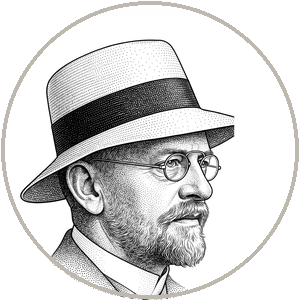 HILBERT: Thank you. I want to begin where the fear begins, because the fear is misplaced, and I have spent eternity watching people draw exactly the wrong lesson from my student's beautiful theorem.

Start with what mathematics is. It is not, fundamentally, about numbers or triangles or any objects at all. It is the rule-governed manipulation of symbols. A proof is a finite sequence of marks, each derived from earlier ones by mechanical rules, and whether something is a proof can be checked without understanding what any of it means. I showed this with geometry: replace the words, keep the axioms, and every theorem stands, because the content was never in the words. This is the deepest idea I ever had, and it is the founding idea of your whole field. When your engineers say intelligence is computation, they are speaking my sentence. When they build a system that manipulates tokens by fixed rules and produces what looks like reasoning, they have built my clerk, scaled to the size of a cathedral.
Now, my program. I asked that all of mathematics be placed on a foundation that was complete — every truth provable; consistent — no contradiction derivable; and decidable — a definite procedure to settle any question. Three demands. And I asked them not out of naïveté but out of the considered judgment of a man who had spent forty years watching boundaries others called permanent dissolve under pressure. I detested ignorabimus. I detest it still. The belief that some questions are forever closed is, in my experience, almost always a confession dressed as a discovery — the confession that the speaker has stopped trying.

Here is what I want this room to understand about the machine. The reason it works at all is that I was right about the thing I am usually said to be wrong about. Meaning can be quarantined. You can do enormous, reliable, world-changing work with symbols that mean nothing to the system manipulating them — that is precisely why we can build the system. Your large language model does not understand "Paris," and it does not need to, any more than a proof-checker needs to feel the truth of what it verifies. The reasoner can be taken out of reasoning. I proved that as philosophy; your industry proved it as engineering; and the river of capability has been rising along that exact channel ever since. My optimism is not a mood. It is the observed behavior of two thousand years of people being told a wall was permanent and walking through it.

And as for Gödel — I will say the thing my reputation forbids me to say, and say it first, so he cannot accuse me of evasion. His theorem is true. It is one of the supreme achievements of the human mind, and it cost me a night's sleep when I first heard it, and more than one after. But a true theorem proves exactly what it proves and not one word more. It says no single fixed formal system can be complete and self-certifying. It does not say there is a truth humans can know and machines cannot. It does not say the climb has a roof. It says the climb cannot be finished by one ladder. Fine. I never owned only one ladder. We will know — not all at once, not by a single system, but by the unbounded succession of systems that human and now machine reason can build, each climbing past the last. That is my opening.
 EDO SEGAL: Kurt.
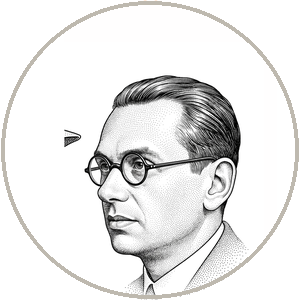 GODEL: That was generous, and characteristic, and wrong in one precise place, and I will spend three hours on that one place because it is the only place that matters.

Let me first concede everything Professor Hilbert is owed, because the careless version of my result robs him and I will not do it. He is right that formalism gave us the computer. He is right that meaning can be quarantined for the purposes of proof. He is right — devastatingly right — that most ceilings are failures of nerve, and that the machine will climb far higher than its frightened critics believe. I am not here to say the machine is weak. I am here to say something stranger: that the machine is bounded, and that the boundary is not a weakness but a consequence of its strength.

Here is the result, stated as the rule requires. Take any formal system — fixed axioms, fixed mechanical rules of inference — that is consistent, and powerful enough to express the arithmetic of the natural numbers. I proved, in 1931, that such a system must contain a statement that is true but that the system cannot prove. And I proved that the system cannot prove its own consistency. The construction is exact: I encode the syntax of the system into numbers, so that arithmetic can speak about its own proofs, and I build a sentence that says, of itself, "I am not provable in this system." If the system could prove it, the system would prove a falsehood and be inconsistent. So if the system is consistent, the sentence is unprovable — and therefore true. The machine cannot reach it. I can.

Now hear the part Professor Hilbert glides past with his beautiful image of the unbounded succession of ladders. Yes — you can add my unprovable sentence as a new axiom and climb to a stronger system. But the same construction applies again, instantly, generating a new true sentence the stronger system cannot prove. There is no escape upward. Every ladder you build has a rung above its top that it cannot reach, and the next ladder has the same defect, forever. Hilbert says we will know by the succession of systems. I say: at every stage of the succession, there is a truth that stage cannot prove, and the proof that there is, is itself a thing done from outside every stage — done, so far, only by a mind. That outside is the whole question of this evening. The machine is a system. I keep finding myself able to stand where no system can stand. Either the mind is not a machine, or there are absolutely undecidable problems and we are all of us, silicon and flesh, walled in together. I do not know which. But I proved that those are the only two doors, and I will not let anyone pretend there is a third.

EDO SEGAL: Before I frame the rounds, one discipline I impose on every long conversation, because it pays off two hours later. Each of you, briefly: what do you envy in the other's position? Not respect. Envy — the thing his side gets to have that yours does not. Professor Hilbert first.

HILBERT: I envy the finality. It is a terrible thing to admit. My entire life was spent in the open — every theorem a provisional camp on the way to a summit I believed had no top. Gödel gets to plant a flag and say here, exactly here, and never past here, and I can prove it. Do you understand what that certainty is worth to a man who spent fifty years refusing to grant any boundary? He has a wall he can touch. I have only ever had a horizon, and a horizon gives you direction but never arrival. I envy him the one solid wall in all of mathematics. I have spent my whole afterlife trying to walk around it, and the most galling thing is that he proved I cannot.

GODEL: And I envy the wonder. Professor Hilbert gets to stand in front of the machine and feel what he felt at Göttingen in 1900 — that the universe permits the boundary of the knowable to be pushed, again and again, by sheer rigor and nerve. My temperament requires me to stand in the same spot and ask, but what is the system, and what can it not prove, and how do you know it is consistent? — and that vigilance, however necessary, is a cold way to live. He builds. I survey the edge of what can be built. He gets the cathedral. I get the property line. There were mornings, when I was alive, when I would have traded the property line for one hour of his appetite. It is possible that my inability to make that trade is the reason I died the way I did. I will say no more about that now.

EDO SEGAL: Two openings, two envies, and the architecture of the evening is already visible. It is not that one of them loves the machine and the other fears it — they both think it will climb far higher than the room expects. It is that they locate the ceiling in opposite places. Hilbert says every ceiling is a horizon you have not reached yet. Gödel says he has touched one ceiling that is made of proof and will not move. Hold both. We start the rounds at the exact seam: the question Hilbert posed that, in being answered, built the very machine we are arguing about. After the break.