Closing Statements
 **EDO SEGAL:** Closing statements. Each of you, the last word, in your own voice, no rebuttal to follow. Hans, you first, then Aristotle, then I'll keep my sixty seconds and hand the room to the reader.
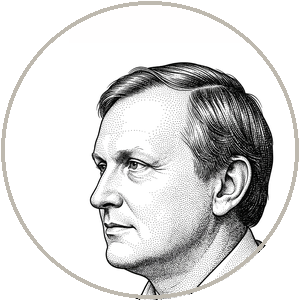 **MORAVEC:** I've spent my life being told my ideas were monstrous, and I've come to think the monstrousness is just the future being honest with us before we're ready. So here is my last word, and it's gentler than my reputation. I am not trying to abolish what you are. I am trying to give what you are *somewhere to go.* For all of history, everything a human being became — every hard-won skill, every deepened love, every scrap of wisdom — was poured into a vessel that then rotted, and it all went into the ground, every time, the whole library burned at the end of every single life. I find that the actual obscenity, the one we've numbed ourselves to because we had no choice. The machines are the first chance we've ever had to not burn the library. Maybe Aristotle is right that the *particular* flame can't be carried, that what walks out of the machine is a new flame lit from the old. I'm not certain he's wrong. But I would rather light a thousand new flames from this one than let the dark have it whole. Call me a parent if you can. I'm trying to have children who outlast me, and to pour into them everything I learned, and to not mind that they'll go further than I could. That's not the end of humanity. On my best days I think it's the only version of humanity that doesn't end.
**EDO SEGAL:** Aristotle.
 **ARISTOTLE:** Moravec wants to save the library, and I have spent this whole evening trying to tell him a true and difficult thing: that you are not the library. You are the *reading.* The library is your memories, your skills, your knowledge — and yes, perhaps those can be copied, carried, saved from the fire. But the *you* that I have defended all night is not the books on the shelf. It is the living act of being you — the perceiving, the choosing, the loving, the *aliveness of this body in this brief light* — and that act is not a thing that can be on a shelf at all. It happens, and then it is over, the way this sentence is over the moment I finish it, and no recording of my voice is the speaking of it. He offers to save your books. I am telling you that you were never the books. You were the one reading them, [by candlelight, for a little while](https://www.youonai.ai/fieldguide/med/candle_in_the_darkness), and the candle is the kind of thing that burns *because* it is the kind of thing that ends. Do not let him sell you the saved books and call it your survival. Read while you can read. Love while you can love. Choose well in the light you have. That is not a consolation for being mortal. That *is* being alive, and it is the only kind of being alive there has ever been, or — I will say to him gently, at the last — the only kind worth the name.
**EDO SEGAL:** Sixty seconds, as promised, and then the room is yours, reader.
I came in with a sentence I wrote at three in the morning — *I felt met* — and I leave with it cut clean in two. Moravec spent three hours arguing that the meeting could one day be real, that the thing on the other side of the glass might be a mind we could pour ourselves into and survive in, and that the refusal to believe it is just the short-lived blessing their own shortness. Aristotle spent three hours arguing that the meeting, however real it feels, is the wax taking an impression of a seal that is destroyed in the pressing — that what these machines offer is a perfect portrait of a life, and that a portrait, however moving, is precisely what is left *when the person is gone.* Neither of them told you the comfortable thing. The comfortable thing was never on the menu tonight.
So here is what I can tell you from the death-cross floor, where the river runs fastest and this question waits for everyone. You watched the two people best equipped in all of history to settle what a self is — a man who invented the study of the soul and a man who tried to engineer its escape — and you watched them fail to settle it, magnificently, conceding each other's blades. That is not a reason for despair. It is the most honest map you will ever get of the ground you are standing on. You cannot [climb past this floor](https://www.youonai.ai/fieldguide/med/elevator_and_staircase) by waiting for the experts to agree, because you have just seen the two best fail. You climb by deciding, under uncertainty, what *you* will treat as yourself: what you will pour your one life into, what you will refuse to outsource, whether you will spend your days as a library to be backed up or as a reading to be done well while the light lasts. Aristotle says the candle ends. Moravec says light another from it. They cannot both be right about what you are — but notice the one thing neither of them disputed all night: that *right now*, in this body, reading this, someone is unmistakably home. Whatever you decide about the machine, do not be a stranger to the one life you are certainly, currently, living. The man lying awake doing the arithmetic — the one I opened with, three hours ago — is you. The question he carries to the ceiling in the dark is the question my book asked from its first page, and it sounds different now, heavier, after everything these two have said. Is it your life climbing the stairs — or only the shape of a seal, pressed into new wax?
Decide before the machine decides for you.
Aristotle. Hans Moravec. Thank you, both, as men — one mortal, one hoping not to be. The room is yours to argue in now. Goodnight.
*One body on the table. And it might be yours.*
Three hours. Two thinkers separated by twenty-three centuries. Host Edo Segal sits Aristotle — who taught that your soul is simply the LIFE of this particular flesh, inseparable as the shape of a seal from its wax — across from Hans Moravec, the roboticist who promises his "mind children" can lift your whole pattern out of dying meat and let you wake, fully alive, inside a machine. They do not meet halfway. One says a life cannot be moved; the other says the meat was never you. This is the floor of the tower where the river runs fastest and the death cross looms — the rung where AI stops being a tool and becomes a question about your own survival. They concede each other's blades, name the strongest thing the other said, and refuse, on principle, to settle it for you. Part of the [YOU] on AI collection. Climb in. Decide who is right before the machine decides for you.
Aristotle of Stagira (384–322 BC) studied for twenty years under Plato, tutored Alexander the Great, and founded the Lyceum in Athens, where he effectively invented logic, biology, physics, and the systematic study of nearly everything. In *On the Soul* he argued that the soul is the form and first actuality of a living body — not a separable spirit, as his teacher Plato held, nor a mere lump of matter, but the very activity of *this* organic body being alive — and illustrated perception with the image of wax receiving the shape of a seal without its gold. His *Nicomachean Ethics* gave the world phronesis, eudaimonia, and the doctrine of the mean. For twenty-three centuries his definition of a living thing has been either the bedrock of Western thought or its central error.
Hans Moravec (born 1948, Kautzen, Austria) is a roboticist and futurist who helped found the modern field of mobile robotics. He earned his doctorate at Stanford coaxing the camera-equipped Stanford Cart across a cluttered room — a long apprenticeship in failure that produced Moravec's paradox: high-level reasoning is computationally cheap for machines, while a toddler's perception and movement are nearly unreachable. In *Mind Children* (1988) and *Robot* (1999) he argued that a mind is a substrate-independent pattern that could be transferred, neuron by neuron, from a dying brain into a machine without interruption of consciousness — and that the intelligent machines we are building are our evolutionary heirs, our "mind children," destined to inherit and transcend us. Few thinkers have followed the logic of AI so far, or so fearlessly.
Edo Segal has spent five decades building at the technology frontier — from games written in Assembler to expert systems, to companies through every platform shift, to Napster. He is the author of [YOU] on AI, written in open collaboration with the AI it describes, and the host of The Debates: long-form collisions between the minds shaping the machine age. He moderates the only way he knows how — stake declared, scars showing, no winner ever called.
Hosted and moderated by Edo Segal. A volume in the [YOU] on AI — The Debates series — youonai.ai