The Seal and the Wax
 **EDO SEGAL:** Aristotle, I want to start this round inside the image that may be the most important single picture in the entire history of the philosophy of mind, and I'd like you to tell it the way you'd tell it to a curious fifteen-year-old who has never read a word of you. In *On the Soul*, when you try to explain how a sense perceives, you reach for wax. Hans, when he's done, I am going to ask you to do something a debater rarely does — to steelman it before you take it apart. But first, Aristotle. The seal and the wax.
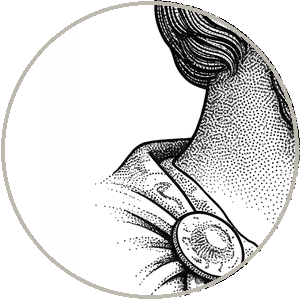 **ARISTOTLE:** When you perceive something — let us say you look at a ring with a seal carved into it, and you press it into soft wax — the wax takes on the *shape* of the seal without taking on the gold or the bronze the seal is made of. The form passes; the matter does not. That is what perceiving is: the sense receives the form of the thing without its matter, the way the wax receives the impression of the signet without becoming gold. I used it to explain perception. But Moravec has, cleverly, turned my own image into a weapon, and I will hand it to him fully loaded so he cannot say I softened it.
Here is the weapon. Moravec says: a life is like that seal. The seal is a *shape*, an information, and you can press it into this wax, and that wax, and a thousand waxes, and it is the same shape every time. So if the self is a form, and a form is like the seal's shape, then of course it can be copied — copying shapes into fresh wax is exactly what a seal is *for*. He will say I gave him the proof of his own position. And I want to concede how good that is before I show you why it is exactly backwards.
**EDO SEGAL:** Hans, that's your cue, but he asked you for the steelman first. Tell us what the seal-and-wax gets right — what it hands you.
 **MORAVEC:** I can do that honestly, because it hands me almost everything. It says the form is what matters and the matter is incidental — the gold of the seal is irrelevant, only the shape transfers. That's my entire thesis in an image two thousand years older than me. It says perception is the *reception of structure*, which is precisely what a sensor does, what a neural network does — receive structure, discard substrate. And it says the same form can live in different matter, which is substrate independence stated in beeswax. If you want to know where I think Aristotle was a closet functionalist who lost his nerve, it's right here. He had the whole machine. He just refused to turn the crank.
**ARISTOTLE:** And now I turn the crank the other way, and watch the machine run backwards into his face. Look again at what the seal does. The seal presses its shape into the wax — and the wax now bears *a likeness of the seal.* It does not become the seal. The wax does not get up and act as a signet. You have not copied the seal at all; you have made an *impression of* the seal, a different thing in different matter that resembles it. The relationship between seal and impression is exactly the relationship between a living person and a portrait, a recording, a copy. My image does not say the form is portable. It says the form leaves *traces* — likenesses — and a likeness is precisely not the original. Moravec, you have spent your career mistaking the impression in the wax for the seal that made it.
**MORAVEC:** No — that's a sleight of hand. In your image the wax is *passive*; it just holds a shape. My electronic brain isn't passive wax holding a picture of a mind. It's running the mind. It does what the original did. The relationship isn't portrait-to-person. It's performance-to-performance — two orchestras playing the same symphony, and you don't say the second orchestra is a "likeness" of the music. It's the music, again, fully.
**ARISTOTLE:** Two orchestras playing the same symphony are two performances of the symphony — and there are *two of them*, Moravec. That is my whole point and you just conceded it. When the second orchestra plays, the first has not moved into it. They are numerically distinct. If both play at once, there are two. If the first burns down mid-concert and the second plays on, the symphony continues but the first orchestra is *ash*. You have proved that the *music* — the form-as-universal, the symphony that can be played anywhere — survives. You have not proved that *this orchestra* survives. And you are not a symphony. You are an orchestra. A particular, perishable, once-only orchestra, and the thing you are trying to save is not the score. It is the playing.
**EDO SEGAL:** Let me make sure the reader has that, because it just got very fast and very deep. Aristotle is drawing a line that runs through every page of him — the line between the universal and the particular. The symphony is universal: it can be instantiated endlessly and it's the same symphony. *This orchestra on this night* is a particular: it happens once. And his claim is that you, the listener, are not a universal that gets re-instantiated. You're a particular that happens once. Hans, he's saying your copy is the symphony played again, beautifully — and that's not nothing, but it's not *you*, because you were never a symphony.
**MORAVEC:** I understand the distinction. I deny that I fall on his side of it. He's asserting that persons are particulars like orchestras rather than universals like symphonies — but that's the conclusion he needs, dressed as a premise. Why should I believe a *person* is more like the orchestra than the music? Everything I care about preserving — my memories, my values, my way of seeing — is on the music side. The particular sweat and spit of these specific musicians, the side I supposedly am, is exactly the part nobody, including me, will miss. You're telling me I'm the disposable part and the precious part is "mere" universal. I think you have it exactly upside down.
**ARISTOTLE:** Then let me press where it costs you. You say everything you care about is the music — memory, value, vision. But who is doing the *caring*? The caring is not in the score. The score does not love your children. The *playing* of it, by this orchestra, on this stage, in real time, with everything at stake — that is where the loving happens. You want to save the part that can be written down and discard the part that does the writing-down. But the writer is not on the page. [The form of a living thing is its very activity of living](https://www.youonai.ai/fieldguide/med/hylomorphism), Moravec, not a record of that activity. You keep pointing at the record and calling it the man.
**MORAVEC:** And you keep pointing at the *substrate* and calling it the man, which is the materialism you claim to have transcended. When my electronic brain loves my children — actually loves them, processes their faces, weeps at their weddings, the full activity, not a recording of it — you'll say "ah, but it's a *different* activity, in different matter." And I'll say: by what test? You can't point to a difference. The loving is identical in every respect you or anyone can name. At some point "it's a different particular" becomes a distinction without a difference — a magic word you say to keep the door closed.
**ARISTOTLE:** It is not magic. It is *number*. There are two of them, Moravec. If your scanner could run tomorrow without destroying the original, there would be a man on the table and a machine across the room, both weeping at the wedding, both certain they are the father, and they would not be the same person — they would be two people who agree about the past. You cannot both be the survivor. And nothing about the destroying of the original changes the metaphysics; it only removes the witness who would have embarrassed you by standing there alive.
**EDO SEGAL:** That's the duplication problem, and it's the sharpest blade on the table, so let me hold the room here for one beat before the bell. Hans, he just said: run your scan without killing the original, and there are visibly two of you, so the copy was never *you*. You can't answer that by killing the original faster. The two-of-you doesn't go away because one of them is a corpse.
**MORAVEC:** I'll answer it properly when we get to it, Edo, because it deserves more than a sentence and it's the one place I have real work to do. But the short version is: the original isn't somebody who got murdered. The original is a *branch*, and when you don't keep two running, there's no rivalry, there's just continuation. We'll fight about it.
**ARISTOTLE:** We will. And the reader should mark that he just called the dying man a "branch." Note the word. We will need it.
**EDO SEGAL:** Hold the branch. Hold the orchestra. We've found the seam, and it's exactly where I hoped — Moravec says you are the symphony, savable; Aristotle says you are the playing, once-only. The next round goes to the question underneath both: what *is* the soul that we're arguing about moving — a thing that floats free of the body, or a thing that can't be peeled off it? Because Hans thinks he's the one rescuing the soul from the meat. And Aristotle is about to tell him he's two thousand years too late to a fight that was already lost — by Plato.