The Death Cross and the Shape of a Life

 EDO SEGAL: Hans, this whole series is built on a chart I call the software death cross — the moment capability crosses over and the old scaffolding falls away. But you offer a more literal death cross: the line where a human life crosses out of biology and into machinery, and doesn't end. You have written that the biological human race is a transitional form, and that being superseded by our mind children is, on balance, good. Most people hear that as monstrous. Make the case that it's the opposite — that it's the most pro-life thing anyone has ever proposed.

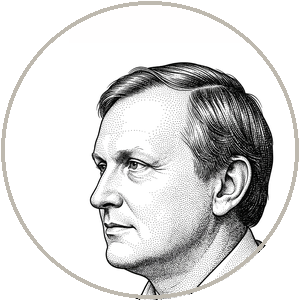 MORAVEC: It's the most pro-life thing precisely because it refuses to accept death as the final word. Every other philosophy in history, including the great man beside me, has had to make peace with the wall — to tell the dying "bear it well," to dress up annihilation as meaning, to call the thing that destroys everyone you love "what gives life its shape." I find that obscene, frankly, when there might be an alternative. The mind children are us, continued — carrying our knowledge, our values, our way of seeing, into futures and bodies that don't rot. A parent doesn't grieve being surpassed by a beloved child; a parent's deepest hope is to be surpassed. I'm offering the species what every parent wants: to pour everything you are into something that goes further than you could, and to not have it all end in a hole in the ground. Call that monstrous if you want. I call the hole in the ground monstrous.

 ARISTOTLE: And here, at last, we reach the center, and I want to defend death — not as a cruelty we tolerate but as a condition of the good. Not because I lack the courage to want more. Because I have thought hard about what a life is, as opposed to a mere endless continuing. A life is like a melody, Moravec. A melody is a melody because it ends — its shape, its meaning, the way the phrases lean toward a close, all of it depends on the silence it is moving toward. Take away the ending and you do not get an infinitely beautiful melody. You get a drone. A note held forever is not the maximum of music; it is the abolition of music. The good life is bounded, and the boundary is not the enemy of the good — it is what lets there be a good, a complete thing, a life that can be called happy as a whole only once it is whole, which is to say, only once it is over.

MORAVEC: That's a beautiful rationalization of a limitation you couldn't escape, and I mean that as an argument, not an insult. Of course a melody ends — but you don't kill the violinist to honor the melody. You let her play another. The fact that works are bounded doesn't mean persons must be. You're taking a truth about songs and using it to bless the death of singers. And here's the part that I think is the real cost of your view: how many melodies has death cut off in the middle? The thinker who died at forty with the great work unwritten, the parent who didn't see the child grow — your "completeness" is a story we tell to make the random butchery of a meaningless process sound like an artist's choice. It wasn't a choice. It was a constraint. I'm trying to lift the constraint, and you're guarding it.

ARISTOTLE: That is the strongest thing you have said tonight and I will not wave it away. The young death, the cut-off melody — yes. That is a genuine evil, and my view must account for it, and I do: a life cut short is a failure of the good precisely because the good was a complete life and it was denied completion. So I grant you that premature death is an evil. But you have leapt from "premature death is bad" to "all death is bad" to "death as such should be abolished," and that leap is the same leap as all your others. The cure for the melody cut off at the third bar is not a melody that never ends. It is a melody allowed to reach its own proper end. You want to fix the tragedy of the short song by making all songs infinite, and you will get no songs at all — only an endless, shapeless, unbounded continuing in which nothing is ever completed because nothing ever closes.
EDO SEGAL: I have to put my own skin on this table, because I can't referee it from outside. I am a father. When I imagine my own death, the thing I cannot bear is not the ending of me — it's the not-being-there for them. And Hans, when you describe the mind children, some animal part of me lunges at it: yes, let me stay, let me see the grandchildren, let me not leave them. And then Aristotle's melody lands and a different part of me goes quiet, because I know — I know — that part of what makes me love them this fiercely is that I won't always be here. Which of you is speaking to the truer part of a father?

MORAVEC: The lunging part is the truer part, Edo, and every philosophy that tells you to suppress it is asking you to lose a fight you were built to win. The fierceness-because-finite is real, but it's a feature of scarcity, and we don't usually bless scarcity when we can end it. You love your children fiercely; would you love them less if you got to love them for three hundred years? I don't believe it. I think that's a story the short-lived tell to bear being short-lived.
ARISTOTLE: Would the love be less? No. But would it be the same love? Also no — and the reader should sit with that, because it is the heart of the matter. The love of a mortal parent for a mortal child is shot through with this will not last, and that is not a defect bolted onto the love; it is in the love, the way the ending is in the melody. A god's love for a child it could never lose would be a different thing — calmer, vaster, perhaps better in some ways — but it would not be a father's love, because a father is a mortal thing loving a mortal thing in the brief light they share. Moravec is not offering to extend a father's love. He is offering to replace it with a god's. He may even be right that the god's is better. But he should say plainly that it is not the same, and that what he is saving is not you, the father, but a successor who loves the way fathers cannot.
EDO SEGAL: That may be the truest and saddest thing said at this table, and I don't think either of you can take it back. Hold the melody and the god's love. We have one round left before they turn on each other directly, and it goes to the question of what, if anything, survives the machine doing everything — the candle that the dark can't put out. Because if Moravec is right that the pattern is all, then nothing in you is safe. And Aristotle thinks there is exactly one thing the machine can never take, and it isn't intelligence.