The Crossing

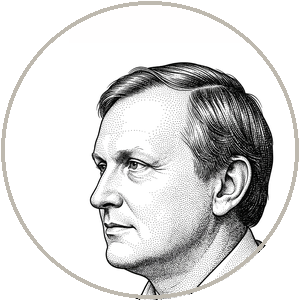 MORAVEC: I'll start, because I've been waiting two hours to ask you this directly, Aristotle, and Edo kept being too kind to make you answer it. You say the soul is the form of this particular body and can't be moved. Fine. But you also believe — it's in your own De Anima — that the nous, the intellect, the part that thinks, might be separable, might be "deathless and eternal." You couldn't make up your mind. So which is it? If the thinking part can survive the body, you've conceded my whole case. If it can't, you've contradicted your own most famous hedge. Where do you actually stand, with no Edo to soften it?
 ARISTOTLE: A real question, and you have read me honestly, which I respect. Yes — I wrote that the active intellect, the part that grasps eternal truths, "alone is immortal and eternal," and I left it deliberately unresolved, and lesser men have spent centuries fighting over what I meant. Here is where I stand, stripped bare. What might survive, on my view, is not you. It is the impersonal activity of thinking-the-eternal — not Aristotle's memories, not Aristotle's love of his daughter, not Aristotle's particular life, but something universal that thinks through me the way light passes through a window. The window does not survive. The light was never the window's. So you have caught a real tension in me — but it does not give you what you want, because the thing that might be deathless in my system is precisely the thing that is not the person. You want Hans Moravec to wake in the machine. The most I ever granted was that something impersonal and universal might outlast the body, and an impersonal universal is the opposite of the particular you you are trying to save. My hedge helps the mystic. It does not help the engineer.
MORAVEC: That's a beautiful escape and I'm not sure it's not just a relabeling. You're saying the universal survives but the particular doesn't — but my whole point is that "the particular" is made of universals: my memories are patterns, my values are patterns, my way of seeing is a pattern, and patterns are exactly the universal, repeatable, transferable things you just admitted can outlast a body. You've drawn a line between "impersonal thinking" that can survive and "personal memory" that can't, but you haven't told me why memory and love are on the mortal side. They're structure too. Why does your universal get to be deathless and mine — the structure of a specific human life — doesn't?
ARISTOTLE: Because your memories are not universals, Moravec — that is the error at the root of your whole science, and you have just walked me to it. The form of the eternal truths I think — the triangle, the good — those are genuine universals, the same for all minds, owned by no one. But "Hans Moravec's memory of his mother" is not a universal; it is a particular, indexed to a particular life, meaningful only as his. You have confused two completely different things because you call them both "pattern." The pattern of a triangle is universal and repeatable. The pattern of your grief is particular and yours, and copying it does not transmit your grief — it produces a second grief, qualitatively similar, numerically distinct, in someone else. You think you are made of triangles. You are made of this once-lived life. And a once-lived life is the one kind of pattern that cannot be repeated without becoming a different instance — which is the whole of what I have said all night, now proven on your own ground.
MORAVEC: Then let me come at you from the side you can't dodge — your own biology. You spent twenty years dissecting animals. You watched a heart be the first thing to form in an embryo. You of all people knew the body is machinery — pumps, levers, fluids, all mechanism. You're the original engineer of the organism. So how does you, the man who reduced the soul's home to plumbing and tissue, turn around and insist there's something in that plumbing that in principle can't be rebuilt in better plumbing? You opened the body and found mechanism. I'm just proposing to copy the mechanism. Why does the great anatomist suddenly go soft and say this machine, uniquely, can't be remade?
ARISTOTLE: Because — and this is the heart of why I am not the materialist you keep trying to make me — I opened the body and found mechanism organized toward an end, and the organization-toward-an-end is the part you cannot copy by copying the parts. A heart is not a pump that happens to be in a body. It is a pump that exists for the sake of the living of this animal, and that "for the sake of" — the final cause, the telos — is not another part you can scan. It is the whole's claim on the parts. You can copy every gear of a clock and get a second clock; you cannot copy "the reason this clock exists" by copying gears, because the reason is not in any gear. I found mechanism, yes — and I found that mechanism alone never explains a living thing, because a living thing is mechanism gripped by a purpose that is the form itself. You scan the gears and miss the grip. That is not me going soft. That is me refusing the one reduction you need and never earned.
MORAVEC: And here's my last and hardest one, the one I'd want the reader to watch you answer. Everything you've said tonight assumes you know the copy isn't conscious, isn't you, is "mere forgery." But you can't know that — you said so yourself, you granted the inside is hidden, that we only see the outside. So you're asking the dying man to refuse the machine, to choose the grave over the copy, on the strength of a metaphysical conviction you've admitted you can't verify. If you're wrong — if the copy is him — your counsel kills people who could have lived. How do you live with advising the grave when you've conceded you might be wrong about the one fact that matters?
ARISTOTLE: That is the strongest thing you have said to me all night, and I will not pretend it doesn't cut, because it does. You are right that I cannot verify the inside, and you are right that if I am wrong, my counsel is catastrophic. So let me answer with the full weight of it. I do not advise the grave. I advise truthfulness — that the dying man go to his end knowing it is his end, rather than soothed by a promise no one can keep. If I am wrong, he loses a chance at machine-life he could not have known was real. If you are wrong, he dies comforted by a lie, his family mourns a man they think survived, and a forgery inherits his name and his children and never knows it is not him. We are both gambling with the dying, Moravec — you toward false comfort, I toward hard truth — and I would rather send a man into the dark awake than into the dark deceived. That is not certainty. It is a choice about which error I could bear to have made. I can bear having told a frightened man the truth. I could not bear having sold him a ghost of himself and called it salvation.
MORAVEC: That's an answer I respect even though I think it's wrong, and I'll say where it's wrong in one breath: you've assumed your view is the truth and mine is the comforting lie, when the whole debate is over which one is true, and you can't help yourself to the conclusion in the framing. But I've run out of ways to push you off the particular, and I think the reader should know I felt the floor under your last answer. You're not hiding behind mysticism. You're standing somewhere.
 EDO SEGAL: I said I'd stay silent and I've nearly managed it, but I have to do one thing before closing statements, because it's the ritual this series is built on and you've both earned it. Name the strongest thing the other man said tonight. Not the most agreeable. The one you'll still be arguing with next month. Hans.
MORAVEC: The melody. "A note held forever is not the maximum of music; it is the abolition of music." I've spent fifty years treating death as pure enemy, pure constraint to be engineered away, and he made me feel — not believe, but feel — that the finitude might be doing something I can't get back once I remove it. I still think I can have the song and the singer both. But he put a crack in my certainty that the singer is disposable, and that crack is going to keep me up.
ARISTOTLE: And for me — the branching. When he said identity is not a single coin to be conserved but a relationship that can fork, and that my "there can only be one you" is a fact about our history and not about the world — that struck something I had treated as bedrock and showed it might be sand. I still believe the dying man stops. But Moravec made me see that my certainty there rests on an intuition that has never once been tested against a world where copying is possible, and I have spent my whole method warning against exactly that — trusting an intuition that has never met its counterexample. He has given me a counterexample I cannot yet dismiss. I will be arguing with the river that has two forks for a long time.
EDO SEGAL: Two men, twenty-three centuries apart, each naming the other's blade and admitting it drew blood. That's the Crossing, and I couldn't have scripted it better. One round remains. Your final words — and then mine, and then the reader's.