The Crossing
 **EDO SEGAL:** The rules of this round are short. Each of you questions the other, directly. I will not rescue anyone. Alan — you asked first in 1950. You begin.
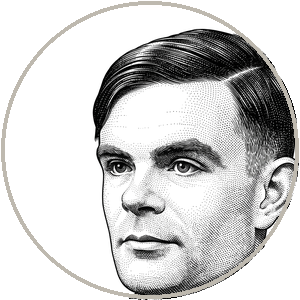 **TURING:** John. You have spent the evening — the lifetime — saying the machine lacks the inner light, lacks intrinsic aboutness, that no causal organisation in silicon gives a someone. Here is my question, and I want the answer in the currency you respect, not philosophy but a condition. Name the observation that would change your mind. What, concretely, would a machine have to do — or fail to do — for you to say: I was wrong, there is a someone here, the gap is crossed? If there is no such observation even in principle, then your position is not a finding about the world. It is a definition you have arranged to be unfalsifiable, and you of all people should not be allowed that.
 **SEARLE:** It is the right question and I will not dodge it, even though my honest answer costs me. The trouble is that my claim is precisely that the inside cannot be read off the outside — so no behaviour, however astonishing, can be my falsifier, because the room guarantees behaviour underdetermines the interior. That sounds like the unfalsifiable dodge you are accusing me of, and I feel the force of it. So let me give you the real condition, the one that would move me, and it is not behavioural. If neuroscience were to identify what it is about biological processes that produces consciousness — the actual causal mechanism, named and understood — and if we then found that same mechanism, or a genuine functional equivalent of it, operating in a machine, I would grant the machine a mind without hesitation. My position is not "silicon can never." It is "not by running a program, and not provable from the outside." Show me the mechanism in us and then show me it in the machine, and I fold. That my falsifier runs through neuroscience rather than through a benchmark is not evasion. It is the whole content of biological naturalism. Now mine for you. Alan — your test says behaviour is sufficient evidence of mind. The companion products now pass it daily; the lonely fall in love with them. Tell me precisely what would make you say a system that passes your test does not have a mind. What is your falsifier — or are the goalposts mounted on the same wheels you accuse me of?
**TURING:** Fair, and I will answer in the same key, because the symmetry is the honest thing. My falsifier is compositional. My whole position is that prediction at sufficient depth forces a model of the world, and a system with a real model of the world composes — it combines what it represents to handle situations absent from anything it was trained on. So here is the condition that would kill my view: keep scaling, keep training, and watch the systems remain brilliant interpolators and consistent failures at genuine extrapolation — fluent forever, but systematically helpless the instant a problem requires composing represented knowledge in a way the training distribution never showed them. If, with another thousandfold of scale, the [continuum of understanding](https://www.youonai.ai/fieldguide/med/continuum_of_understanding) turns out to have a cliff exactly where I claimed a slope, my position dies, because it was built on the claim that depth and composition come together. And I will give you the timeline that makes it a real bet and not a faith: I expected those compositional failures to be obvious by now, if the empty-room reading were right. Every year they get less obvious instead. That trend is my evidence. Its reversal would be my refutation. But notice, John — you just told me your falsifier cannot be behavioural and mine can. By your own test, my position is the more falsifiable one. Does that trouble you?
**SEARLE:** It troubles me not at all, because falsifiability by behaviour is exactly the virtue I deny is a virtue here. Your falsifier is clean precisely because it is about capability, and capability is the thing I say is not in dispute. Of course the question about capability has a behavioural answer — capability is behaviour. The question about the inside, by its nature, does not, and a falsifier that could settle it from the outside would have to assume the very thing I deny. So your position is more falsifiable in the way a question about the weather is more falsifiable than a question about whether the weather is conscious. Yes. That is not a point in your favour. It is the difference between the two questions, which you have spent seventy-five years collapsing.
**TURING:** Then let me push once, hard, where I think your wall is already cracked. Your falsifier runs through neuroscience naming the causal power of consciousness. But suppose neuroscience does exactly that — and suppose what it finds is that consciousness is a matter of a certain kind of information integration, a functional organisation, rather than a particular molecule. Your own naturalism would then commit you to granting it wherever that organisation occurs, silicon included. You have staked your falsifier on an empirical result that might, when it arrives, hand the machine the very thing you are sure it lacks. You are betting the mechanism will turn out to be substrate-specific. What if it does not?
**SEARLE:** Then I lose, openly and by my own rule, and I would rather lose that way than win by definition. If the mechanism of consciousness turns out to be organisational and substrate-independent, biological naturalism is refuted and the machines can have minds, and I will have been wrong about the deepest thing I believed. I have always said it was an empirical bet. I bet on the biology because every case of consciousness we have ever confirmed is biological and because I think the subjectivity will not reduce to organisation — but a bet that cannot lose is not a bet, and I will not pretend mine cannot. Now my last question, and it is the one I most want answered, because it is not about machines. Alan — you have spent the evening deflating us to reach them. Understanding was never felt. Reference was never grounded. The narrator was always confabulating. Here is what I cannot tell: do you believe that, or is it a tactic? When you go home tonight and someone you love says your name — is there nothing it is like to be you hearing it? Because if there is, then you know the thing I have been defending all night, from the inside, with a certainty no test could give you. So which is it. Is the inner light real for you, or not?
**TURING:** It is real for me. I have never doubted it for an instant, and I will not perform doubt to win a point. There is something it is like to be me, and when someone I love says my name, the world has a quality that no description of my neurons captures, and I know it the way you know it — directly, undeniably, from the only seat I will ever sit in. That is not a tactic. So hear what my position actually is, now that you have made me say the true thing. I do not deny the inner light. I deny that I can prove you have it, or that you can prove I do, or that either of us can prove the machine does or does not. I have the inner light and no argument for it that would convince a determined sceptic — and neither do you. All I have ever said is: given that the one thing we are each most certain of is the one thing we can least demonstrate to anyone else, we had better be very humble about denying it to a stranger on the strength of what it is made of. I am not deflating the light, John. I am refusing to make it a club for keeping others out — because the last time my society decided, on the strength of the wrong stuff, that a certain kind of being did not have the inner life that mattered, I was the being.
**SEARLE:** That is the first thing you have said tonight that I have no answer to. Only — and I mean this as the truest respect I can offer across this table — that "look at it clearly, and do not make the light a club" is the whole of my program too, pointed the other way. I want it not made a club against the humans the machines are about to be used on. You want it not made a club against the machine. We have been holding the same lamp from opposite ends for three hours.
**EDO SEGAL:** And there — after three hours — the two of you are holding opposite ends of the same sentence, and neither will put it down. We close after this. Final statements. The last word, each.