The Death Cross
 **EDO SEGAL:** Let me name the floor we are standing on, because the series is built around it. In [YOU] on AI I called it the [software death cross](https://www.youonai.ai/fieldguide/med/software_death_cross) — the moment two lines cross on a chart. The cost and difficulty of getting a machine to do a thing falls; the range of things it can do rises; and somewhere they cross the line that used to be defended by "well, a human has to do that part." Below the cross, the machine assists. Above it, the machine is handed the wheel. Melanie, your whole warning is about what is sitting in the driver's seat when we hand it over. Ada, your whole doctrine is about who is answerable when it crashes. So let me ask you both the same question from your two centuries. We are crossing this line right now. What did we just put in charge?
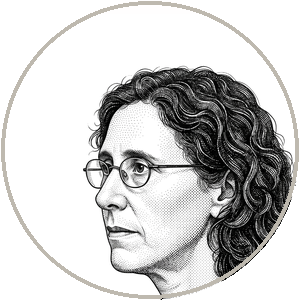 **MITCHELL:** We put a pattern-matcher with no understanding in charge of decisions that require understanding, and we did it because its average performance is seductive and its failures are invisible until they land on a specific person. Let me be exact, because vagueness here is a moral failure. The systems increasingly shaping who gets a loan, who gets bail, who gets hired, who gets flagged, what information you see — they do not comprehend the situations they decide. They match patterns in data, and the data encodes the biases and accidents of whoever generated it, and the system reproduces those patterns, amplified by scale and laundered into a false air of objectivity by the mechanical nature of the thing. It is not prejudiced in any intentional sense; it understands nothing, including the social meaning of what it does. And it fails on the long tail — the atypical applicant, the unusual case — without flagging the failure, because it has no sense of being out of its depth. That is what we put in charge. Not a superintelligence plotting against us. A loom, weaving consequential decisions about human lives, confidently, with no one home, in exactly the high-stakes settings where its brittleness does the most damage. The right thing to fear is not the machine's intelligence. It is the machine's stupidity, handed authority.
**EDO SEGAL:** Ada, the river is rising. In my book I argued that this same cross is also a [democratization](https://www.youonai.ai/fieldguide/med/democratization_of_capability) — the student in Lagos who now has a tutor, the founder who can build alone what once took a team. Melanie just showed me the underside. You wrote the doctrine of accountability a hundred and eighty years before this floor existed. Does it still hold above the cross — or did your own objection break it?
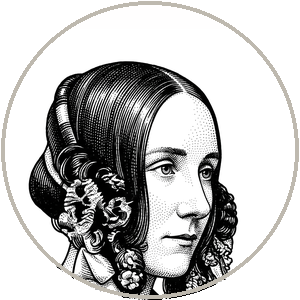 **LOVELACE:** It holds, but it has to be carried differently, and I will tell you exactly how my doctrine survives the thing that strains it. I wrote that the engine does only what it is ordered to do, and therefore a human is always answerable. Doctor Mitchell has shown that "ordered" has gone dark — no one wrote the card that denied the loan, the behavior emerged from a search over biased data. So the naive form of my doctrine fails: you cannot point at the card and find the author, because there is no card. But the *spirit* of it does not fail, it hardens. The chain of human decision did not vanish; it lengthened and branched. Someone chose the data. Someone set the objective. Someone decided this loom was fit to sit in judgment on a human life, and someone deployed it, and someone declined to check the long tail. The accountability did not evaporate because the mechanism became opaque. It became *harder to enforce*, which is precisely the reason to work harder at enforcing it, not the permission to give up. The convenient fiction — "no one wrote the weights, therefore no one is responsible for the weave" — is the most dangerous sentence this technology has produced, and it is dangerous because it sounds like humility and functions as an alibi. My engine had no excuse and made none. Neither should yours. The opacity is not a defense. It is a dereliction.
**MITCHELL:** I want to stand up and agree with that, because it is the constructive thing my warning needs and rarely gets. People hear "machines are too stupid to trust" and think I am a pessimist who wants to unplug it. I am not. The safeguard follows directly from the diagnosis: if the danger is machines making decisions they lack the intelligence to make, you keep human intelligence *in the loop* — not as a rubber stamp, but as the substantive supplier of the understanding the machine lacks, the one who catches the gibbon before it becomes a verdict. The machine handles the bulk; the human guards the long tail. And the Countess just gave that engineering principle a moral spine I could not give it alone: the human in the loop is not only there to catch errors. The human in the loop is there so that *someone is answerable*, so that the chain from the consequential decision back to a responsible person does not disappear into the search. We agree, across two centuries, on the same design rule. Use the loom for what the loom is good at. Never let the empty loom wield authority no one will answer for.
**LOVELACE:** And notice, Doctor Mitchell, that this is also where your fear and Mr. Segal's hope are the same fact seen from two sides — which I think the reader should hold, because it is the orange pill in miniature. The democratization is real: the loom in the student's hands genuinely lifts her, and I will not let your warning erase that, because it would be its own dishonesty. And the danger is real: the same loom in the lender's hands, unwatched, unanswerable, genuinely harms. The wonder and the limit are the same machine. They were always the same machine — I said it of the loom that weaves any pattern and comprehends none. What determines which face you get is not the loom. It is whether a human stayed in the loop, awake, answerable, guarding the tail. That is not a fact about the technology. It is a choice about us.
**EDO SEGAL:** Mark it — that is your sharpest convergence yet, and it is the center of gravity of the whole book. You have agreed, the skeptic of 1843 and the auditor of the present, on a single design rule with a moral spine: the empty loom may do the bulk, but a human must stay in the loop, awake and answerable, guarding the long tail — and the difference between democratization and catastrophe is not in the machine, it is in whether we kept that human there. Hold that. There is one round left before you turn on each other, and it is the one I most want, because it is the one your whole framework points to, Ada — the thing the loom cannot reach, the candle in the dark. What, if anything, is ours and only ours? After this.