The Candle and What Cannot Be Woven

 EDO SEGAL: Ada, you invented a phrase for the faculty that produced everything we have been discussing — you called it poetical science, the marriage of the imagination that sees what a machine means and the discipline that checks whether the seeing is true. Babbage had the engine entire in his head and saw a calculator. You, who could not have built it, saw a universal machine that might compose music. The difference was not knowledge of the mechanism. It was imagination about it. In my book I call the thing that cannot be automated the candle in the darkness — the small human light that does not get brighter with scale. So let me ask the question the whole evening has been climbing toward. If the loom can weave any pattern we formalize, what is the candle? What is left that is ours, and only ours — and are you sure it stays ours?
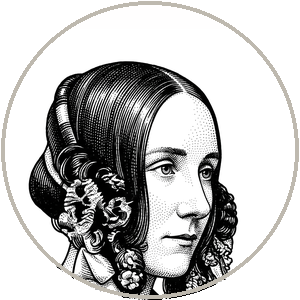 LOVELACE: I located it precisely in 1843 and I have not had to move it, though I have had to defend it harder than I expected. The candle is not the production of patterns — the loom does that, in any quantity, in any domain we formalize, and every year it weaves a domain we thought was ours. The candle is the origination of purpose: the deciding of what the patterns are for. The engine could compose the music. The human had to want the music to exist — to mean it, to decide that this music rather than that was worth making, and why, and for whom. The machine that originates nothing leaves the entire domain of purpose untouched, because purpose is not a pattern to be woven; it is the someone for whom the weaving matters. That is poetical science at its root — not the imagination that generates, which the loom now shares, but the imagination that cares which generation is worth wanting. And here is the hard half, the half I will not soften, because you asked whether I am sure it stays ours. I am not. Every domain we formalize and hand to the loom, we discover that the part we were proud of was operation, not origination — that our creativity was, more than we flattered ourselves, weaving. The candle does not go out. But it gets smaller and more honest with every domain the loom takes, until what is left is only the irreducible thing: the wanting, the for-whom, the purpose no pattern contains. The orange pill, in my hands, is not the comfort that the machine can never replace us. It is the harder discipline of finding out, domain by domain, what in us was ever more than weaving — and building and meaning that remainder on purpose.
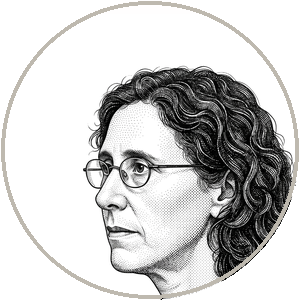 MITCHELL: I find that almost entirely beautiful and I want to add the one thing my science makes me unable to leave out, because it changes where the candle sits. You say the candle is the origination of purpose, the wanting. I would say — and this is the embodiment thesis again, the fourth fallacy — that the wanting is not a free-floating spark either. It is the most grounded thing we have. A four-year-old's purposes come from a body with needs, in a world with stakes, shaped by a history of consequences — hunger, fear, love, the cup that breaks, the person who is or is not where you left her. The reason the loom has no purpose is the same reason it has no common sense: it has never lived in a body in a world that pushes back, with something at risk. So I will give you the candle and tell you what it is made of. It is made of being a mortal, embodied, world-engaged creature with skin in the game — and that is precisely why I am less worried than you that we will formalize it away. You can formalize chess because chess does not require a body. You cannot, I suspect, formalize caring what happens to you without building a thing that can have something happen to it. The candle is not a mystery ingredient. It is the body and the world and the mortality — which is also, not by accident, exactly the equipment the loom does not have and cannot be given by scaling text.
EDO SEGAL: So the two of you have, between you, named the candle — and you have not agreed on whether it is safe. Ada says the candle shrinks honestly, domain by domain, and may end as almost nothing. Melanie says the candle is the body and the mortality, and is therefore harder to formalize than Ada fears. Let me press you both with the version a parent at the kitchen table would ask, because that is where this lands. A mother watches her daughter use the loom to write the essay, solve the proof, compose the song — all the things the mother struggled to learn. She asks: what do I make my daughter struggle to learn now, if the loom can weave it all? What is the candle I am supposed to be protecting in my own child?
LOVELACE: Protect the checking. Protect the wanting. I caught Mr. Babbage's error — that is the whole of my fame, more than the program: I am the one who checked the calculation. Teach your daughter to want something specific enough that she can tell whether the loom served it, and rigorous enough that she can catch the loom when it weaves a plausible falsehood — the gibbon dressed as a panda. The loom will hand her fluent answers all day. The candle is her capacity to know which answer is hers, anchored to a purpose she originated, and to check whether the fluent thing is true. Do not let her outsource the wanting or the checking. Everything else she may borrow from the loom. Those two, if she loses them, she loses the only places where she is the someone and not the reflection.
MITCHELL: And I would say to that mother, in complete agreement and with one addition: protect the grounding. Let your daughter keep dropping the cup and watching it break — keep her in a body, in a world, with friction and consequence, because that is where the understanding the loom lacks actually comes from, and it is the only thing that lets her catch the loom when its fluent answer is subtly, confidently wrong. The danger is not that the machine gets too smart for her. It is that she lets the machine's frictionless answers stand in for the grounded understanding only a lived life produces, and so loses the ability to know when it is out of its depth — which means losing the ability to stay the answerable human in the loop. The candle the mother is protecting is not a talent. It is her daughter's grip on reality, won by living in one. The loom has read about the world. Make sure your daughter still lives in it.
EDO SEGAL: Hold that — both of you just told a mother the same thing in different vocabularies, and it is the most useful thing said tonight: keep the child wanting, keep the child checking, keep the child grounded, and let her borrow everything else. That is the candle, named at last, by the skeptic and the auditor together. Now I keep my promise. For two and a half hours I have stood between you. The last full round, I step out of the room in every way but the legal one. The crossing — you ask each other, directly, and I do not rescue anyone. After this.