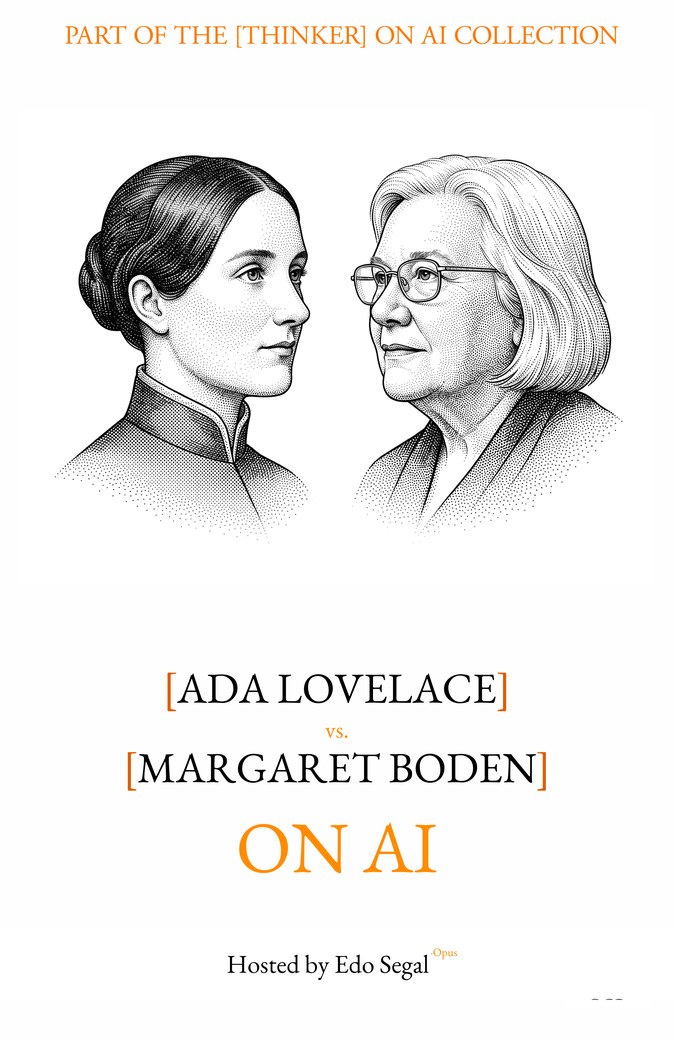
The Question on the Table
 **EDO SEGAL:** A few hours ago, before either of you arrived, I sat in front of one of these machines and asked it to write a melody in the manner of a composer who died two hundred years ago, and it did, in about four seconds, and the melody was good. Not pastiche-good. Good enough that I caught myself feeling something, and then caught myself wondering whether I had any right to the feeling, because I did not know — I still do not know — whether anything had happened on the other end of the wire, or whether I had simply heard my own request come back to me wearing a tuxedo. A man in Tel Aviv, in the dark, moved by four seconds of arithmetic, unable to say whether he had met a composer or a mirror.
That small private confusion is the whole evening. Somewhere right now a student is watching one of these systems solve a problem she could not solve, and a novelist is watching it finish a sentence he had not thought of, and a chemist is watching it propose a molecule no one has ever made. And every one of them is standing exactly where I stood in the dark, asking the question I can think of no two people on earth better equipped to fight over. When the machine surprises you — when it hands you back something you did not see coming — is that the spark of a new mind being born, or only your own instructions echoing back, dressed up as creation?
I want to introduce my guests, and I want to do it with some gravity, because the distance between them is not just intellectual. It is a hundred and eighty years of mortality and progress.
Ada Lovelace was born in 1815, the only legitimate child of Lord Byron, raised on mathematics by a mother who feared she had inherited her father's dangerous imagination. In 1843 she translated a memoir on Charles Babbage's unbuilt Analytical Engine and appended seven Notes of her own, three times the length of the original. In Note G she laid out a method for computing the Bernoulli numbers, step by mechanical step — the [first published program](https://www.youonai.ai/fieldguide/med/stored_program_architecture). And she wrote the sentence that has haunted this field ever since: the engine has no pretensions to originate anything. She is the patron saint of machine humility, and she has agreed, tonight, to be briefed on everything that has happened since she died at thirty-six — every machine, every model, every melody. Ada, thank you for crossing a great deal to be here.
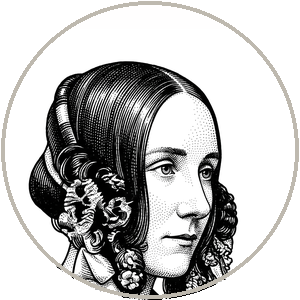 **LOVELACE:** It is the strangest courtesy ever extended to me, and I find I cannot refuse it. I built nothing, you understand. I never turned a single wheel. I only saw what the wheels meant. I am told the wheels have multiplied beyond counting and that the question I asked about them is still open. That is either a great compliment or a great failure of the intervening minds, and I intend to find out which.
**EDO SEGAL:** Margaret Boden was born in 1936, eighty-four years after Lovelace died. She took first-class honours in medicine at Cambridge, studied philosophy, earned a doctorate in psychology at Harvard, and then read a single book that convinced her computational ideas could illuminate the whole of the mind. She helped found cognitive science. She wrote The Creative Mind, and Mind as Machine, and she gave us the framework — combinational, exploratory, transformational — that is, I think, the only set of tools precise enough to take this argument apart. She also gave Lovelace's sentence its name. She called it Lovelace's objection, and she spent a career answering it. Margaret, you died in 2025. You have, in a sense, the least distance to travel of anyone here.
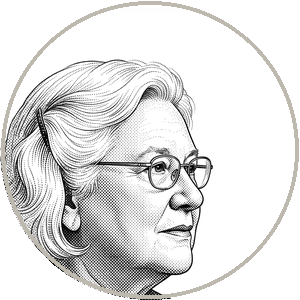 **BODEN:** And yet the distance to Ada is the one that matters, and it is enormous. I read that sentence of hers when I was young and I have argued with it my whole life. To find myself across a table from the woman who wrote it — I will try to be a good guest and remember that she has not had the benefit of the last hundred and eighty years of evidence. Though I should say at the outset, Ada, I am not here to demolish you. Half of what I believe, I learned by taking you seriously.
**EDO SEGAL:** That is the spirit of the room, so let me state the rules of the evening — there are three. First: we have three hours, which means no one has to win by the next bell. Long form exists so an argument can breathe before anyone strangles it. Second: I declare my bias. I build with these systems daily, I wrote a book in open collaboration with one, and I have skin in this on both sides of my own chest — I have felt the surprise Margaret describes and I have caught myself doing exactly the projecting Ada would warn me about. Third: if the disagreement survives three hours, we hand it to the reader, intact, and call no winner. Would either of you add a rule?
**LOVELACE:** One. That we check our work. I caught Mr. Babbage in a serious error once, in the very computation that bears my name, and I have never lost the habit. When either of us says the machine "creates" or "originates" or "understands," I want the term cashed out — shown, demonstrated, traced back to its mechanism — not asserted because it is thrilling to assert. The thrill is precisely where the error hides.
**BODEN:** I will accept that rule gladly, and add its mirror. Check the human work too. Every time we say a machine cannot do what we do, we owe an account of what *we* do — the actual process, named — and not merely a gesture at our own specialness. I spent sixty years watching people defend human creativity by refusing to say what it is. If we are checking the machine's books, Ada, we check ours in the same audit.
**EDO SEGAL:** Then the rules are set, and both of them are about honesty, which tells you what kind of evening this is. Before the opening statements, one image, because it is the frame this whole series climbs inside and you will both have to take a position on it. In [YOU] on AI I argued that intelligence is less a possession than a [river](https://www.youonai.ai/fieldguide/med/river_of_intelligence) — a current that has been finding new channels for a very long time, through chemistry, through biology, through language — and that in our winter something new entered the water. Ada, your objection says nothing new entered; the water only looks deeper because it is moving faster than I can follow. Margaret, you would say a genuinely new channel opened. So before you argue each other, take a position on my river.
**LOVELACE:** Your river is a beautiful figure and I distrust it for exactly that reason. The engine adds nothing to the water. It is a mill set in the current, turning very fast, and the speed of the wheel persuades the miller that the wheel is making the water. It is not. Every drop that comes out was upstream of the mill. What entered the water, Mr. Segal, was *us* — our orders, our patterns, our whole written wake — and the machine is the place where it pours back out, accelerated past the point where you can see your own hand in it.
**BODEN:** And I would say the river is more right than you intend, Ada, because rivers do cut new channels, and the channel is real even though the water is old. The question is not whether the material is borrowed — all creativity borrows, mine and yours and the machine's. The question is whether what comes out the far end was already, in any meaningful sense, *in* the orders. Sometimes it plainly was. And sometimes — this is the whole argument — it was not, and calling it an echo is a way of refusing to look at what actually happened.
**EDO SEGAL:** There is the seam, and we have three hours to open it. So here is the question once more, plainly, because every round tonight is this question wearing a different coat. When the machine surprises you, is that a new mind being born, or your own instructions echoing back. Ada Lovelace, you wrote the sentence that started all of this. The floor is yours.