The Bernoulli and the Bit
 **EDO SEGAL:** Ada, I want to take you back to the actual object — not the philosophy, the artifact. Note G. The Bernoulli numbers. You sat down and wrote, by hand, a sequence of operations that would make an unbuilt engine compute a sequence from advanced calculus, with intermediate results stored and fed forward, structured to loop. The first program. And every single card, you have told us tonight, you could trace to a human decision — you knew what each one did and why. I want you to stand in that memory and tell me what it feels like, from inside that certainty, to look at a modern model, where no one wrote the cards and no one can read them. Is it the same machine to you, or a different animal wearing its skin?
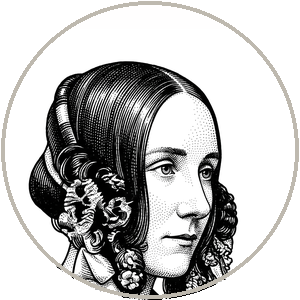 **LOVELACE:** It is the same machine and a different situation, and the distinction matters more than anything else we will say tonight, so let me be slow. When I wrote the Bernoulli table, I possessed a complete account of the engine's coming behavior. Nothing would happen that I had not ordered. If you had asked the engine, "why did you compute that?", the honest answer was "because she wrote a card that said to." There was a clean line of authorship running from every output back through a card to my hand to my intention. That line is not a technicality. It is a moral architecture. It locates *responsibility*. The engine had no excuse and needed none, because everything it did was traceable to a person who chose it.
Now your machines. The cards — the weights — were not written. They were found by an automatic search through a corpus no one fully read, optimizing an objective, settling into a configuration of billions of numbers that no human authored and no human can interpret. The procedure is still separable from the substrate — that part of my insight survives perfectly. But the procedure is no longer *legible to anyone*. And here is what frightens me, the genuinely new thing your century made that mine did not: the clean line of authorship is not gone, but it has become long, branching, and dark. You cannot ask your machine "why did you say that?" and get "because someone wrote a card." You get a shrug dressed as an answer. The accountability did not vanish. It went into hiding, and a great many people would now like to use the hiding as an excuse — "no one wrote the weights, so no one is responsible for the weave." That is the most dangerous sentence of your era, and I would spend my second life refusing it.
**EDO SEGAL:** So what you're saying is — the engine's deepest virtue, in your eyes, was never its power. It was its *legibility*. It could always answer "why," and ours can't, and you think that's a catastrophe disguised as progress.
**LOVELACE:** I think it is the catastrophe most disguised as progress, yes. Power without legibility is not the engine I imagined. It is the engine with its conscience removed.
 **CHAITIN:** I agree with the danger and I want to deepen it, because it's worse than she says and my mathematics shows exactly why. Ada wants to trace the line of authorship back through the weights. I have to tell her the line is not just dark — in general it is *uncomputable*. There is no algorithm that, given a weight and an output, reliably tells you why. That's not an engineering gap we'll close with better tools. The question "what is the shortest explanation of this behavior" is exactly the kind of question my theorems say has no general solution — determining the true complexity of a string, the real reason behind a pattern, is uncomputable. So when the public demands that we "open the black box and explain the model," they're often demanding something I can prove is impossible in the general case. We can get partial explanations, local ones, statistical ones. We cannot get the clean card-to-hand line back, ever, because the math forbids it. Ada's legibility was a property of *hand-authored finite procedures*. The moment the procedure is found rather than written, legibility becomes, in general, uncomputable. She's mourning something my theorems say is genuinely, permanently lost.
**LOVELACE:** Then we are in worse trouble than I thought, and I would rather know it. But notice, Gregory, what your own proof gives back to me. If the machine's behavior is uncomputably opaque even to its makers — if no one can trace the new thing to a card — then how dare anyone claim the machine *originated* it? You cannot have it both ways. Either the line of authorship exists and the human is responsible, or it is lost and no one can say the machine is the author either, because authorship requires exactly the traceability you just told me is gone. The opacity that destroys my accountability also destroys your origination. A thing whose source no one can compute has no demonstrated author at all — not the human, not the machine. It has only the *appearance* of authorship, which is the cloth, which is the flowers, which is in our eye.
**CHAITIN:** *Pause.* That's clever and I have to think about it. You're saying opacity is symmetric — it dissolves the claim "the human authored it" and the claim "the machine authored it" at the same stroke. And you're right that it does. But I'd point out the symmetry leaves us exactly where the conservation law put us: the information came from somewhere — the data, written by humans, plus whatever randomness entered — and "authorship" in the responsibility sense follows the information, even when the *explanation* is uncomputable. We can't trace the path. We can still bound the source. The melody the machine wove came from the corpus of human melodies plus noise. No one can say which card. Everyone can say which *corpus*. Responsibility attaches to the corpus and the people who pointed the machine at it, even though the step-by-step is lost. That's the honest position: source known, path uncomputable, responsibility intact, explanation gone.
**EDO SEGAL:** Let me bring this down to my kitchen table, because I think a parent listening deserves the stakes in a form she can hold. My daughter uses one of these systems for her homework. It hands her an answer — fluent, confident, formatted like truth. She cannot trace where it came from. Her teacher cannot. The company that built it cannot, not really, not the actual line from her question to that exact answer. Ada, Gregory — for *her*, the twelve-year-old at the table, which of your two pictures should she carry? That no one is home and she is reading her own reflection in a fine cloth? Or that something compressed all of human knowledge and handed her a piece of it she should trust to the degree the territory is regular?
**LOVELACE:** She should carry mine, because mine makes her the responsible party and yours invites her to relax. Tell her: this is a loom. It weaves answers, beautifully, and it knows nothing of whether they are true, because the [symbols it moves are not fastened to the world they name](https://www.youonai.ai/fieldguide/med/symbol_grounding_problem) — the fastening is done by you, in your head, every time you read the cloth. The truth is not in the loom. It is your job, the same as it was the job of every human before the loom existed, to check the cloth against the world. The machine has not taken that job from you. It has made it more urgent, because the cloth is now so fine you will be tempted to skip the checking. Do not skip the checking. The someone who has to care whether the answer is true is *you* — there is no other candidate in the room.
**CHAITIN:** And I'd tell her almost the same thing, which should worry both of you about how close we are. I'd say: this machine compressed an enormous amount of what humans know, and where humans broadly agree and the pattern is strong, it's usually right — trust it about the color of the sky. Where the question is rare, or novel, or where the truth is irregular, it's guessing in a confident voice, and it cannot tell the difference itself — I can prove it can't, the math forbids self-knowledge of where compression fails. So the discipline is the same as Ada's: you are the one who has to know which kind of question you asked. The machine won't tell you, because it can't. We disagree about whether anyone's home in the loom. We agree completely about what your daughter has to do, which is: stay the one who checks. Don't outsource the checking. That's not philosophy. That's survival.
**EDO SEGAL:** Mark the second convergence: *the skeptic who says no one's home and the mathematician who says understanding is compression give the twelve-year-old the identical instruction — be the one who checks; the machine cannot check itself.* Two opposite metaphysics, one practice. Hold that, because it's the most useful thing we've found, and it survives whichever of you is right. Now we go to the place only Gregory can take us — the number that proves there are answers no machine can ever reach, not because it's weak, but because the answer isn't there to be found.