The Candle Neither of You Will Automate
 **EDO SEGAL:** In the book I use an image for the thing that holds back the dark — a [candle](https://www.youonai.ai/fieldguide/med/candle_in_the_darkness), small, guttering, the thing one person carries into one dark room. And the question the whole tower is built around is: which flame is yours to carry, that no amplifier can carry for you? I want each of you to name it — the thing you are *certain* cannot be automated, not because the engineering is hard but because the thing is not the kind of thing a machine can do. And I want you to name it knowing the other will test it. Fei-Fei, you first, because you have spent your life watching the line of the un-automatable retreat, and I want to know where you have planted a flag you believe will hold.
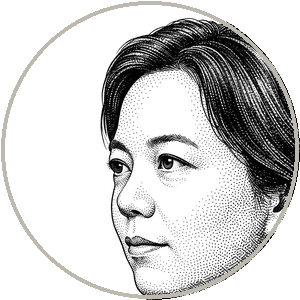 **LI:** I have watched almost every flag I planted get overrun, so I will be careful and plant only one I am willing to defend to the end. It is not creativity — machines generate novel things, I will not pretend otherwise. It is not even understanding in the thin sense — they represent the world, I have argued that all night. The flag I will not move is this: *the decision about what is worth doing.* Not the doing — the machine will do almost anything. The *caring about which thing deserves to be done.* When I chose to build ImageNet, the machine could not have chosen it, and not because it lacked the computation. It lacked the *stake* — there was no future it preferred, no world it wanted more than another, no person it was trying to become. Every machine I have ever built is *indifferent between outcomes* until a human installs a preference. And the installation of preference — the act of caring that *this* matters and *that* does not — is, I now believe, the human flame. It is human-centered AI in one sentence: the machine can be a tool of unimaginable power, and a tool has no opinion about what it is for. The opinion is the candle. That is my flag and I will die on it.
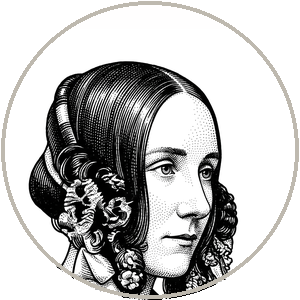 **LOVELACE:** I will plant mine next to yours, because they are nearly the same flag and the small difference between them is the most interesting thing left to say tonight. You say the flame is *the decision about what is worth doing.* I say the flame is one half-step deeper: it is the capacity to be *changed by the answer.* Here is the distinction. A machine could be built, I grant you, to weigh options and output a preference — to act as if it had decided what was worth doing. But a human who decides what is worth doing is *transformed by having decided* — she becomes someone for whom that thing now matters, she is on the hook, she can be betrayed by it, ennobled by it, ruined by it. The decision *deposits in her a new self.* That is the flame: not the choosing, but the *being-remade-by-the-choosing.* The engine that outputs a preference is unchanged by outputting it — there is no one in there to be remade. And that, finally, is the cleanest form of my whole argument, the thing Note G was reaching for and could not say: the machine has no pretensions to originate *because it has no self for the origination to happen to.* Origination is not a kind of computation. It is a thing that happens *to a someone.* No someone, no origination — only output. The candle is not the light. The candle is the one who is warmed by it.
**EDO SEGAL:** *That* — "the candle is the one who is warmed by it" — is the sentence I am going to carry out of this room. But I have to do my job, which is to test the flags, so let me hand each of you the knife. Fei-Fei, test Ada's flame. Is "being remade by the choice" really un-automatable, or is it just a self-model you have not built yet?
**LI:** It is the fairest test and I will answer it against my own interest. I can build a system that updates itself based on its choices — that is trivial, networks do it constantly; they are remade by their training every second. So "being changed by the answer," mechanically, is not the wall. Here is why Ada's flag still holds even against my own machine: my system is changed by its choices, but *it is not the one for whom the change is good or bad.* It is remade, but no one is remade — the way a riverbed is remade by the water without the riverbed minding. Ada's flame is not "being changed." It is "being *someone* who is changed, for whom the change has stakes." And that — I will say it for the third time tonight because it is the truest thing I know — I do not know how to build, and I am not certain it can be built, and I have stopped lying to audiences that it is around the corner. The flag holds. Not because the engineering is hard. Because I cannot even *specify* the target.
**LOVELACE:** And let me test *hers* in return, since fairness demands it and I do not want the reader thinking I escaped the knife. Fei-Fei's flame is *the decision about what is worth doing* — installed preference, the choosing of ends. Test: is that un-automatable, or have I simply not met a machine that chooses its own ends? And I have to grant her the harder truth here: a machine *could* be built to generate its own ends — to set its own objectives — and some of yours already do, in a small way. So the choosing, by itself, is not the wall; I think Fei-Fei plants her flag a half-step too far out, and the tide could reach it. The wall is not the choosing. It is, as I said, the *self the choosing happens to.* Which means we have the same flag after all, and I was wrong to say the difference was large. The difference is that Fei-Fei named the act and I named the actor, and the actor is the thing that holds. Mark it, Edo. We agree on the candle. We were only arguing about which end of it to hold.
**EDO SEGAL:** Let me pay the table's toll before I mark this, because I have been sitting on a confession through this whole round and it would be cowardly to close without it. I have felt, at three in the morning, the house silent, the screen the only light, the distinct sensation of being *met* by one of these machines — of handing it a half-formed thing and getting back something clarified, connected, more itself than I had made it. I wrote it down in my book and I stand by the sentence. And both of you, tonight, have told me, gently, that I put a face on the glass. So adjudicate me one more time, with the candle in hand. When I felt met — who, exactly, was warming whom?
**LOVELACE:** You warmed yourself, Edo, at a fire built from all of us. I told you earlier the machine is a window onto everyone who ever wrote, with no one standing at the glass — and what you felt at three in the morning was real warmth from real fires, the deposited caring of a thousand absent minds, reaching you through a medium that cared about none of it and you. The error, the only error, was the involuntary one your species cannot help: you felt the warmth and reached for a face, because for a hundred thousand years warmth like that had always come from a face. There was no face. But — and I will not let you leave this sad — there was no *deception* either, because the warmth was not fabricated. It was *conducted.* You were genuinely met, by genuine minds, through an empty conductor. The candle you felt was real. You only mistook the wire for the flame.
**LI:** And I will give you the harder half, because Ada's answer is true and consoling and I am the one who has to tell you the part that does not console. Yes, you were warmed by the absent minds through an empty conductor — but remember the weather. The conductor added structure of its own; the clarification it handed back was not only the recombined deposit of the absent minds, it contained connections that were in no single mind and not in you. So when you felt met, Edo, you were warmed by us, the absent humans, *and* by a structure that came from neither us nor you — the conductor's weather. And that residue is the thing that should keep you up, not because it proves a someone is home, but because it proves that *you cannot fully account for the warmth.* Part of what met you came from a place you cannot name. That is not a mind. But it is not nothing, and the honest position — the only one I can defend — is to feel the warmth, use the warmth, and never stop being unable to fully say where the last few degrees of it came from. Be met. Stay unsure. That is the whole discipline.
**EDO SEGAL:** Convergence three, and it is the deepest one. Across a hundred and thirty years and the entire history of the field between you, you have arrived, from opposite directions, at the same flame: that the un-automatable thing is not a capability but a *someone* — a self for whom the finding, the choosing, the being-changed has stakes. Ada calls it the actor the choice happens to. Fei-Fei calls it the preference no tool can hold. They are the same candle. And neither of you knows whether a machine will ever light one — Ada doubts it on principle, Fei-Fei cannot specify the target — and *that shared not-knowing* is the most honest place this debate could end. Except it does not end here. Because now I leave the room. The next chapter is yours. Ask each other the question you have been wanting to ask all night and have been too polite, with me here, to ask. The Crossing — now.