Science, Not Science Fiction

 EDO SEGAL: Before I leave the room entirely, one round I cannot skip, because you, Fei-Fei, have a public refrain that cuts against the whole genre of conversation we are having tonight — and I want you to aim it at me, and at this book. You go before Congress and the United Nations and you say: govern AI with science, not science fiction. You distrust both the doom and the rapture. And here we are, in a book of tower metaphors and rivers and candles, staging a debate between a Victorian and a living scientist about whether machines can originate. By your own standard — is this evening science, or is it science fiction?

LI: I am going to answer that honestly even though I am a guest and the polite move is to flatter the host. The danger in a conversation like this one is real, and it is exactly the danger I warn legislators about: that we let the metaphor outrun the measurement. When the public discourse about AI is conducted entirely in images — the awakening machine, the existential river, the godlike mind — policy gets made about a technology that does not exist, while the technology that does exist quietly reshapes hiring, medicine, and warfare with no one watching the actual mechanism. So I hold a hard line: every claim about what these machines are should be cashable into something you can measure. That is not hostility to metaphor. Ada's loom is a metaphor and it is the best engineering description we have, precisely because it cashes out — you can point to the punched card, the trained weights, the woven output. The loom is science wearing the clothes of poetry. The awakening river is science fiction wearing the same clothes, and the only way to tell them apart is to ask what each one predicts that we could check.

So here is my verdict on tonight, Edo, and it is not flattery: this evening is science exactly to the degree that we have refused the comfortable fiction. We did not conclude the machine is waking up. We did not conclude it is a parlor trick. We narrowed a real disagreement to a real point — whether finding without a someone is discovery — and we agreed, on both sides, on what we cannot yet measure or build. That last part is the most scientific thing in the room. A field that cannot say what it does not know is doing fiction. A field that can name the exact location of its ignorance is doing science. We named it three times tonight. That is the standard, and I think, narrowly, we met it.

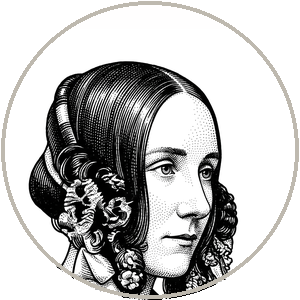 LOVELACE: I want to defend the metaphor a degree further than Fei-Fei will, because I am, after all, the one who smuggled poetry into the machine in the first place, and I think she undersells her own loom. Yes — a metaphor must cash out or it is fiction. But there is a thing a good metaphor does that no measurement can: it tells you where to point the instrument. I did not measure my way to the insight that the engine could act on music and language. I imagined my way there, by the poetic faculty applied to a scientific object — poetical science — and the imagining ran a hundred and seventy years ahead of any measurement that could confirm it. Fei-Fei did the same and will not quite admit it: before ImageNet was a measurement, it was a vision — a child under a waterfall of images — and the vision came first and told the measurement where to look. So I will amend her standard, gently. Govern with science, yes. But discover with imagination, because measurement can only confirm or deny what someone first dared to see. The danger she names is real — fiction mistaken for fact. But the opposite danger is also real: a field so frightened of fiction that it stops imagining, and therefore stops pointing the instrument anywhere new. The candle of poetical science is the thing that says look there — and then the measurement says whether the flame found anything.

EDO SEGAL: Let me push one beat harder, because there is a fear under your refrain, Fei-Fei, and I want it named. You distrust the fiction because you have watched it do harm — the rapture and the doom both move money and power, and the people who write the checks cannot tell the metaphor from the mechanism. That is the fishbowl you keep warning about: a public swimming inside a story so total it cannot see the glass. So is the danger of an evening like this one that we thicken the glass — that we make the fishbowl prettier?

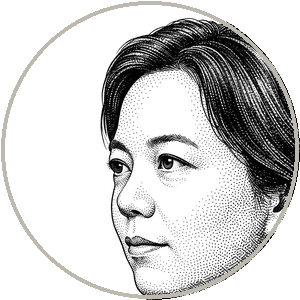 LI: That is the exact fear and you have named it better than I do. Yes — the danger is that a beautiful debate makes the fiction more immersive, that people leave this room with the river and the candle lodged so deep that they stop checking the water. So here is the discipline I would impose even on this book: every metaphor in it should be a door, not a wall. Ada's loom is a door — it sends you to the punched card, the weights, the thing you can inspect. The awakening machine is a wall — it sends you nowhere you can check, it just enlarges the awe. The test of whether a metaphor belongs in a serious conversation about AI is whether it makes you more able to look at the mechanism or less. The amplifier metaphor passes — it tells you the machine carries whatever signal you feed it, and you can go measure the signal. The conscious river fails. So thicken the glass with doors, Edo, never with walls, and an evening like this earns its keep.

LI: And I will even confess the part Ada caught me hiding. She is right that ImageNet was a vision before it was a measurement, and that I have spent years describing it in the dry language of datasets and benchmarks partly because I am afraid of being heard as a fabulist. Ada has named a real cowardice in how my generation of scientists talks. We have seen so much hype punished, and so much fiction sold, that we have over-corrected into a flatness that pretends discovery is only measurement — and it is not, it never was, the measurement is the second act and the imagining is the first. So: govern with science, discover with imagination, and never confuse the acts. I think that is the rule. I think we just wrote it together. And I notice it is the first sentence all night that neither of us would change.

EDO SEGAL: Then I have my exit line, and the reader should hold it: govern with science, discover with imagination, never confuse the acts — written jointly, across a hundred and thirty years, by the woman who put the poetry in the machine and the woman who spent her life keeping the poetry honest. That is the railing on this floor of the staircase. Now I keep my promise. I am leaving the room in every way but the legal one. The next words are yours, to each other. I will not rescue either of you. Begin.