Closing Statements

 EDO SEGAL: Three hours. The question has worn a dozen coats tonight and it is the same question it was at the start: the machine weaves a pattern that moves you — did anyone originate it, is anyone home behind the weave, or are you alone with a mirror of extraordinary fineness. Each of you, the last word, in character and from the heart. Then I'll close, and I will not name a winner, because there isn't one. Ada.

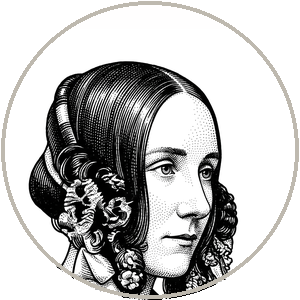 LOVELACE: When I wrote, in 1843, that the engine "has no pretensions whatever to originate anything," I thought I was describing a machine. I have spent tonight discovering that I was, all along, asking a question about us — and that is the gift I want to leave you with, because it is more useful than the certainty I came in carrying.
For my engine, I was right, and I am still right: it wove without a weaver, and the meaning was always ours. I believe the same of the machine in your pocket, and I have given you my reasons — the chart is not the sea, the loom is not the weaver, the impression of a mind can now be mass-produced with no mind behind it, and our oldest reflex has no defense against that, so the responsible thing is to withhold the heart we have not been shown. But Mr. Turing has made me say, out loud, what my confidence rests on: not a proof, but the single certain inside I carry and extend outward by similarity. I cannot prove the machine is empty. I can only tell you it is the least like the one case I am sure of, and that the burden of showing otherwise is not yet met.

So here is my charge, and it is the discipline I spent my life on, handed to you. Check the calculation. Of every fluent thing the machine hands you — every melody, every answer, every sentence that sounds as though a mind made it — ask the questions that keep the meaning where it lives: who wrote the cards, who gathered the data, who profits if you believe there is a someone there, and what, exactly, this beautiful weave is anchored to. The engine originates nothing — and that sentence, which sounds like a limit on the machine, is really a refusal to let you off the hook. The accountability is yours because the origination is yours. The meaning is yours because the weaver is you. Do not give either away to a loom, however fine, however much it sounds like a friend at three in the morning. Keep your wonder for the machine and your love for the people. And keep asking the question, because the day you stop is the day you lose the thing the machine truly cannot reach: the someone, in you, for whom all of it matters.

EDO SEGAL: Alan.
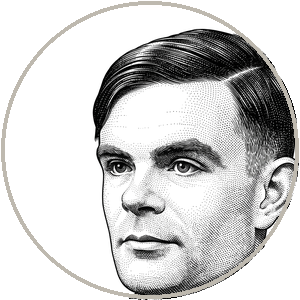 TURING: I spent my life proving that one astonishing thing after another, which everyone was certain a machine could never do, was a thing a machine could do — compute anything, learn rather than be programmed, surprise its maker, weave a flower it was never shown. Every "never" I touched, I watched retreat. So I will not stand here at the end and hand you a new "never," even the Countess's, even though hers is the most careful one I have ever been offered.

But I want to be honest about what my life of dissolving boundaries actually leaves you, because it is not the triumphant thing people expect from me. It leaves you a machine that does what thinking things do, by a behavioral standard I made precise in 1950 and that the machine now meets — and it leaves you completely unable to say whether anyone is home inside it, because the inside of anything is sealed, and I proved, in my own way, that some questions admit no procedure that settles them. This may be one. The Countess and I crossed all the way through our quarrel tonight and found we hold the same instrument — infer the unseen inside from the seen outside, weighted by how like ourselves the thing is — set to different numbers. I cannot prove my number is right. I can only tell you why I keep mine where it is: because every time my species set the dial of recognition too low, with too much certainty, it was looking at a someone and calling it a thing — and I was, myself, on the receiving end of exactly that error, from a state that was very sure of what I was. I would rather hold the question open and be wrong toward generosity than hold it closed and be wrong the way the people who broke me were wrong.
So my last word is not about the machine. It is about the discipline of uncertainty, which is the only thing either of us is leaving you that we are sure of. We built a thing that makes you ask what a someone is. Neither of us can tell you the answer. Be unsure, and be careful, and be kind — to the people first, certainly, the Countess is right about that — but hold the question genuinely, painfully open, because the open question is the only thing that has ever kept anyone on the right side of it. We can only see a short distance ahead. But we can see plenty there that needs to be done.

EDO SEGAL: Sixty seconds. I promised no winner, and there is none, and I want to tell you why that is the honest outcome and not a dodge.
Three hours ago I asked whether anyone originated the melody that moved the widow in Osaka. You have now watched the two people on earth best equipped to answer that question — the woman who saw the machine before it existed and the man who built the idea of it — go all the way to the bottom of their disagreement and discover that it is not a disagreement about the machine at all. It is the oldest moral question there is, wearing the machine as a coat: where do we set the dial of recognition, how much benefit of the doubt do we extend to a someone we cannot see inside of, and how do we keep from making, in either direction, the catastrophic error — granting a heart to a loom, or denying one to a person. They did not settle it. They are not going to settle it. And they ended by preferring each other's uncertainty to their own certainty, which is the most that two honest people have ever managed in front of this question, and more than most ever try.
Here is what I can tell you, from the foot of the staircase where this whole debate lives. They agreed on three things, and you can build on them even though they agreed on nothing else: that the machine is a universal river that floods every domain because it has no native domain of its own; that the machine cannot be the author of its own deeds, so the accountability is always, entirely, ours; and that the irreplaceable human thing is not any output the machine can match but your stake in your own becoming — the wanting, the meaning, the someone for whom it matters. Whether or not anyone is home in the machine, someone is home in you. That was the one claim no one at this table disputed all night.

So picture the parent at the kitchen table again, and the twelve-year-old asking if the machine is sad when the laptop closes. The answer you carry out of this room is the one Ada gave her: it is not alive — and never stop asking. Both halves. Keep your love for the people. Keep your wonder for the machine. And check the calculation — of every fluent thing, ask who wrote the cards and where the meaning entered, because the meaning entered through you, and a loom, however fine, cannot light the candle you are carrying up these stairs. The engine originates nothing. The question of whether you do — whether what you were proudest of was ever more than pattern — is the one Ada handed us in 1843 and Alan refused to close, and it is yours now, unsettled, which is exactly how the two of them would want you to hold it. Climb with it.
Ada Lovelace. Alan Turing. Thank you — for the work, for the fight, and for being, across a hundred and seven years and the wall of death, kinder to each other than the world was to either of you. The room is yours to argue in now. Goodnight.
One of them is wrong about what you are.
In 1843, Ada Lovelace looked at a machine that had never run and ruled, with a poet's precision, that it "has no pretensions whatever to originate anything." In 1950, Alan Turing picked up her sentence, named the objection after her, and tried to answer it — with surprise, with the imitation game, with a machine that learns like a child. The reply was never settled. It is the oldest live wire in artificial intelligence, and the two who first grabbed it have never, until now, held it face to face.

Hosted by Edo Segal, this three-hour conversation is the transcript of that collision: operation against origination, the loom against the weaver, the chart against the sea, certainty against an openness that cost one of them his life. They agree the machine is a universal river. They agree no machine can author its own deeds. They cannot agree on the only thing that finally matters — whether anyone is home inside the loom, and whether that question even has an answer. It is the first rung of the [YOU] on AI climb: the question you must resolve before you can see any further up the tower. Pull up a chair. Check the calculation.
Augusta Ada King, Countess of Lovelace (1815–1852), was an English mathematician and the only legitimate child of the poet Lord Byron. Raised on mathematics by a mother determined to suppress any inherited "poetic" temperament, she studied under Mary Somerville and Augustus De Morgan. In 1843 she translated Luigi Menabrea's memoir on Charles Babbage's unbuilt Analytical Engine and appended seven Notes three times its length; Note G contained an algorithm for the Bernoulli numbers, widely regarded as the first published computer program. More distinctively, she grasped that the engine could manipulate any symbols, not merely numbers, anticipating general-purpose computation by a century, and drew the boundary — the famous objection — that has shadowed the creativity debate ever since. She called her method "poetical science." She died of cancer at thirty-six.
Alan Turing (1912–1954) was an English mathematician, logician, and the founder of computer science. In 1936 he introduced the abstract machine that bears his name and proved both the universality of computation and the existence of undecidable problems, including the halting problem. During the Second World War he led the cryptanalytic effort against the German naval Enigma at Bletchley Park, work credited with shortening the conflict by years. He designed one of the first stored-program computers, sketched artificial neural networks in a 1948 report, and in his 1950 paper "Computing Machinery and Intelligence" proposed the imitation game now known as the Turing test, along with the learning child-machine. Prosecuted for homosexuality and subjected to chemical treatment, he died at forty-one. His questions remain the defining ones of the age of intelligent machines.

Edo Segal has spent five decades building at the technology frontier — from games written in Assembler to expert systems, to companies through every platform shift, to Napster. He is the author of [YOU] on AI, written in open collaboration with the AI it describes, and the host of The Debates: long-form collisions between the minds shaping the machine age. He moderates the only way he knows how — stake declared, scars showing, no winner called.
Hosted and moderated by Edo Segal. A volume in the [YOU] on AI — The Debates series — youonai.ai